
 EN
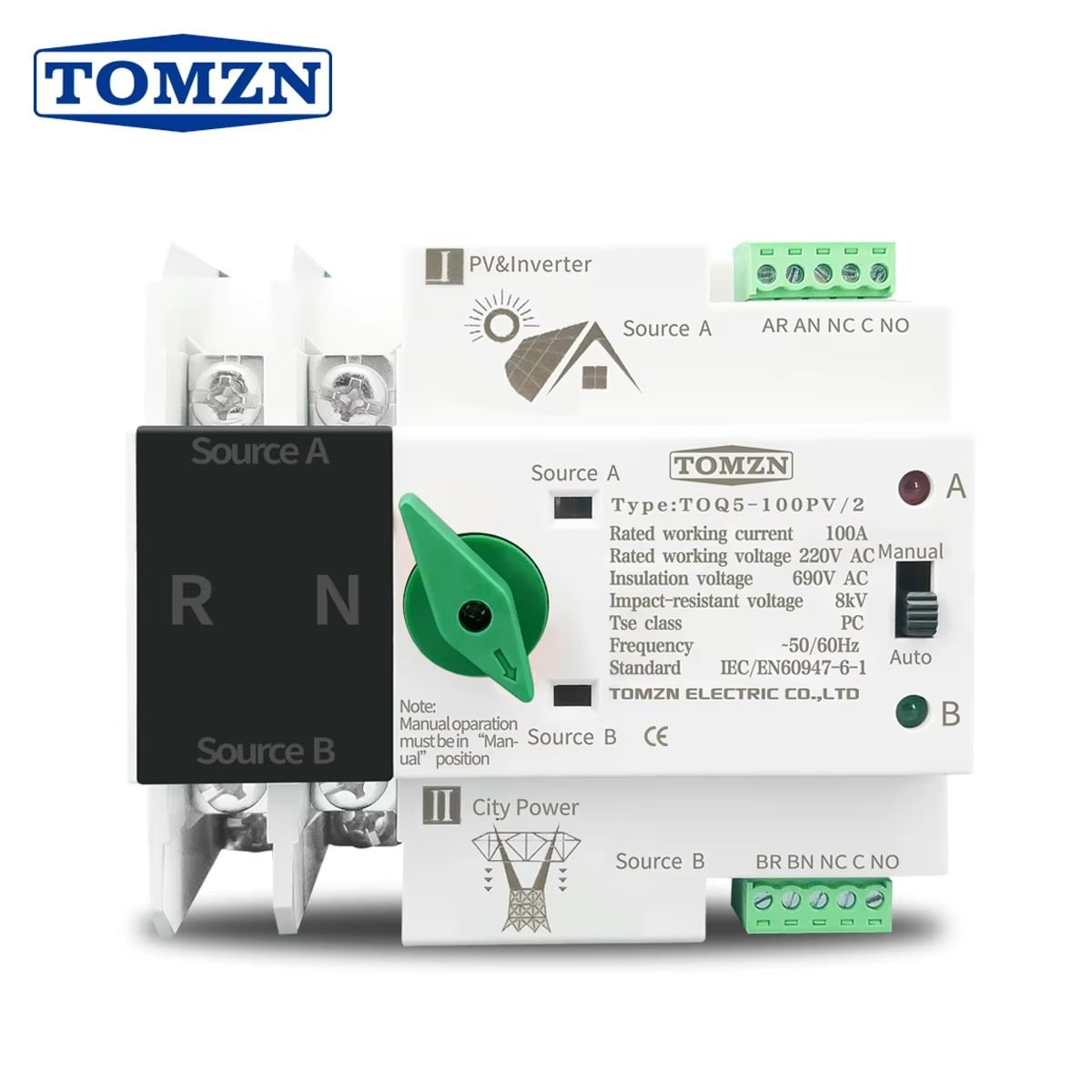
Core ATS Functions and Performance Metrics by Application
Critical Differences Between Main and Standby ATS Operational Roles
An Automatic Transfer Switch (ATS) in the main power path carries load continuously and must reliably distinguish source degradation from transient disturbances. Voltage and frequency pickup/dropout thresholds govern generator start initiation and transfer timing: overly tight settings cause nuisance starts during normal grid fluctuations, while overly loose settings delay emergency response. In healthcare facilities, NFPA 110 mandates restoration of life-safety and critical branch power within 10 seconds—requiring precise retransfer delays and in-phase monitoring to avoid unnecessary cycling. Standby-side ATS units operate mostly unloaded until activated; they must verify generator voltage and frequency stability before closing, then manage cold-load pickup, motor inrush, and step-load acceptance without voltage collapse. In data centers, closed-transition ATS schemes—paired with UPS systems—enable seamless transfers that prevent voltage sags and unnecessary battery discharge. Main-side testing typically requires bypass isolation to maintain continuity of service, whereas standby-side tests can be conducted under controlled load. These functional distinctions drive differences in sensing logic, transfer timing, and fault-duty exposure.
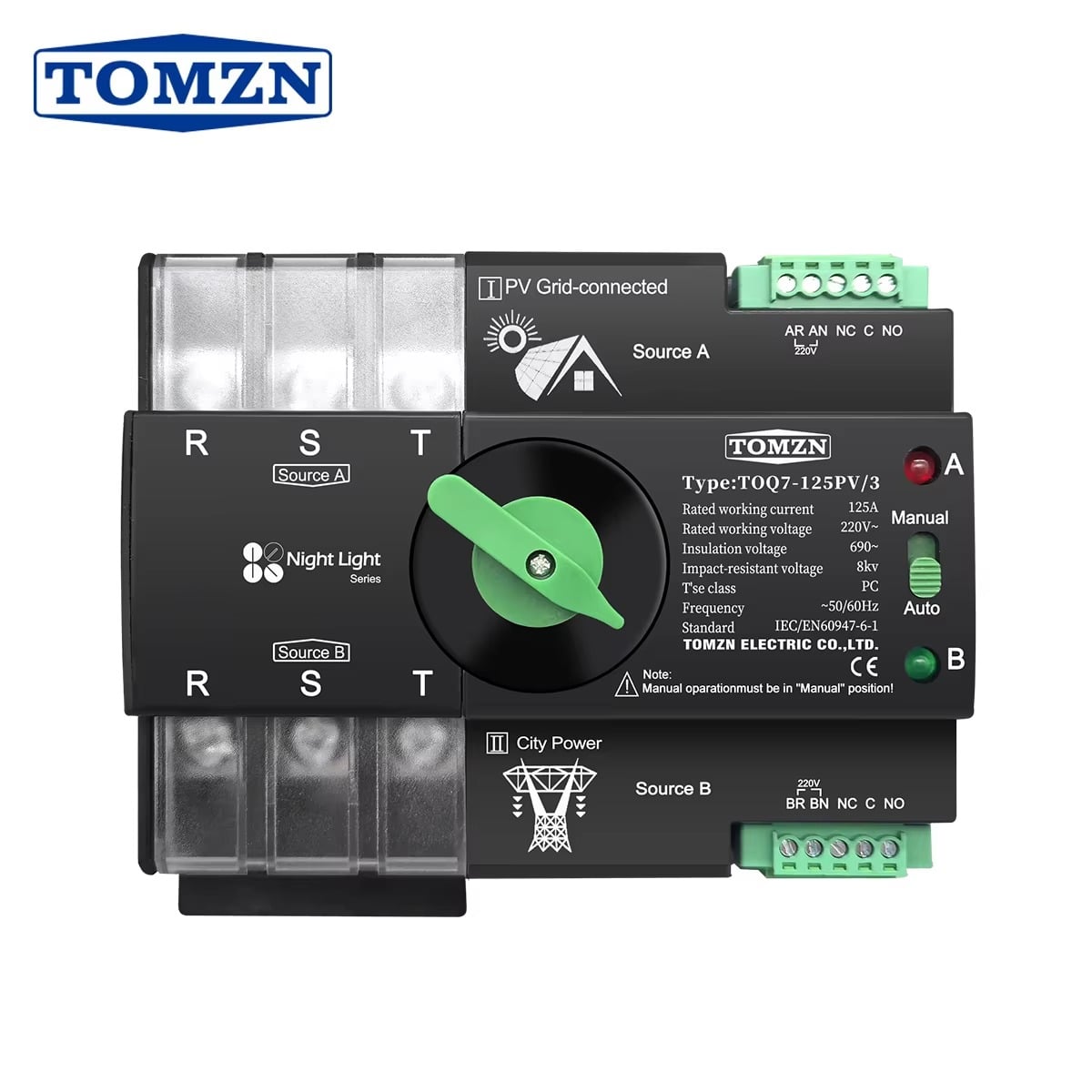
Key Performance Metrics: Transition Time, Contact Rating, and Fault-Withstand Capability
Transition time—the interval from source outage to successful load transfer—must balance speed for critical loads against the need for generator stabilization. Contact rating must accommodate continuous current at rated temperature and the highest anticipated load step, not just generator kW output. Fault-withstand capability—typically expressed as withstand and closing rating (WCR)—must equal or exceed the available fault current at the ATS location, ensuring safe closure even during fault conditions. Always validate these values against the application’s maximum available fault current and actual load profile—not nameplate amperage alone. For standby applications, confirm the ATS can carry full generator output at expected ambient temperatures.
| Metric | Quality indicator | Main vs standby relevance |
|---|---|---|
| Transition time | Adjustable pickup/dropout and retransfer delays | Standby ATS must start generator and transfer without dead-bus |
| Contact rating | Continuous current at rated temperature | Main ATS carries load continuously |
| Fault-withstand capability | WCR and short-time current rating | Standby ATS may close into fault after source failure |
Compliance and Certification: UL 1008 vs. IEC 60947-6-1 for ATS Duty Types
The right certification path prevents dangerous mismatches between main and standby ATS duty.
How Certification Scope Dictates Suitability for Main vs. Standby ATS Deployment
Certification scope—not physical placement—determines whether an ATS is safe for main or standby use. UL 1008 applies to automatic and nonautomatic transfer switches up to 1,000 V AC in non-hazardous locations, but it does not certify all listed devices for service-entrance duty. A main ATS serving as service equipment must be explicitly marked and applied per the locally adopted electrical code. In contrast, IEC 60947-6-1 covers complete type-tested transfer switching equipment—including automatic transfer switches, bypass/isolation configurations, and closed-transition units—up to 1,000 V AC or 1,500 V DC. Field-assembled combinations of unrelated switches do not meet this standard’s performance or safety requirements. For standby ATS deployments, duty may be less continuous, but utilization category and short-circuit rating must still align precisely with load characteristics and upstream protective devices.
Lessons from Real-World Failure: Data Center Outage Linked to Misapplied ATS Certification
A documented data center outage traced to misapplied certification illustrates the risk: an ATS certified only for standby duty—and carrying a lower short-circuit withstand rating—was installed at the main service entrance. During a downstream fault, contacts welded, preventing transfer to the alternate source and collapsing both power paths. The root cause was not component failure, but misinterpretation of the product’s UL 1008 or IEC 60947-6-1 certification boundary: its listed fault-withstand and endurance profile did not support main-rated service. Operators should request the full certification record, verify marked ratings on the unit, and confirm the listed duty type matches the intended service or standby role before installation.
Operational Validation: Load Testing, Bypass Integrity, and Endurance Benchmarking for ATS Reliability
Effective validation begins with staged load testing: applying 25%, 50%, 75%, and 100% load steps while logging voltage, frequency, temperature, and transfer timing during utility failure and return. This confirms the ATS handles real-world load profiles without sag, overheating, or timing violations. Contact resistance and pole-resistance measurements further verify switching integrity prior to operational stress. A successful test also validates correct phase rotation, stable generator frequency, and appropriate retransfer cool-down timing.
Bypass integrity becomes essential when maintenance cannot interrupt critical power. Isolation bypass configurations allow live-service access—but their cost and complexity are rarely justified outside mission-critical infrastructure. For most installations, planned functional testing and visual inspection provide robust risk mitigation without added hardware. Verifying phase rotation, terminal torque, and generator start wiring during scheduled maintenance catches early signs of contact seizure, arcing, and control faults—protecting downstream loads while keeping maintenance practical.
Endurance benchmarking per UL 1008’s total system load rating provides a rigorous reference: 3,000–6,000 transfer cycles, with half performed at 100% and half at 200% rated current. This far exceeds typical operating stress. A switch passing these tests delivers meaningful reliability margin. Therefore, validation should combine staged load runs, contact diagnostics, and endurance evidence—not reliance on nameplate ratings alone.
Vendor Assessment: Firmware, Diagnostics, and Lifecycle Support for Critical ATS Deployments
Evaluating an ATS vendor goes beyond catalog specifications. Facility engineers must assess how firmware updates are released, what diagnostic data the switch exports, and how long the manufacturer commits to lifecycle support. A trustworthy vendor publishes a clear firmware revision history and offers staged update paths tailored to both main and standby ATS roles. Without transparency, hidden firmware defects may persist until a transfer event fails.
Beyond the Datasheet: Evaluating Remote Monitoring, Arc-Flash Mitigation, and Update Transparency
Remote monitoring must deliver real-time status, granular event logs, and configurable alarms—not just a binary “running” signal. Request a live demo of the vendor’s diagnostic interface to evaluate usability and depth. Arc-flash mitigation is especially critical for main ATS deployments where maintenance occurs near energized busbars. Leading vendors incorporate reduced-energy let-through modes and zone-selective interlocking—but these features must be verified under actual fault conditions, not lab simulations alone. Update transparency is another key differentiator: ask for written guidance on rollback procedures, backward compatibility with legacy controllers, and published end-of-life timelines. Vendors that withhold firmware changelogs or require proprietary service contracts for standard updates introduce avoidable operational risk. Prioritize suppliers offering open diagnostic registers, routine security advisories, and a documented ten-year lifecycle plan for both main and standby ATS platforms.
Frequently Asked Questions (FAQ)
What is the key difference between a main ATS and a standby ATS?
A main ATS continuously carries load and requires precise source sensing, while a standby ATS remains mostly inactive until activation and focuses on generator voltage and frequency stability.
What certifications are essential for ATS deployment?
UL 1008 is ideal for non-hazardous automatic transfer switches, while IEC 60947-6-1 applies to fully type-tested transfer switching equipment. The recognized standard depends on the application and load characteristics.
Why is transition time important for ATS performance?
Transition time balances the need for rapid load transfer with the requirement for generator stability, ensuring reliable power restoration during outages.
How can ATS endurance be validated?
Endurance can be verified through staged load testing and benchmark cycles, as outlined in UL 1008 standards, combined with diagnostic evaluations and operational stress tests.
What are the most critical vendor traits for ATS reliability?
Transparency in firmware updates, diagnostic interface usability, and lifecycle support are key elements to evaluate when selecting an ATS vendor.
Table of Contents
- Core ATS Functions and Performance Metrics by Application
- Compliance and Certification: UL 1008 vs. IEC 60947-6-1 for ATS Duty Types
- Operational Validation: Load Testing, Bypass Integrity, and Endurance Benchmarking for ATS Reliability
- Vendor Assessment: Firmware, Diagnostics, and Lifecycle Support for Critical ATS Deployments
- Frequently Asked Questions (FAQ)