
 EN
EN
Industrial operations depend on electrical stability more than most facility managers realize until something goes wrong. A single voltage irregularity — whether an overvoltage surge, an undervoltage sag, or a phase imbalance — can bring an entire production line to a halt, damage expensive motors, and trigger cascading failures across connected equipment. The question of whether a 3 phase voltage protector can meaningfully reduce downtime risks is not theoretical — it is one of the most practical decisions a plant engineer or facility operator can make when designing a resilient electrical system.
The answer, supported by real-world industrial experience, is a clear yes — but the degree to which a 3 phase voltage protector reduces downtime depends heavily on how it is selected, configured, and integrated into the broader electrical protection strategy. This article examines the mechanisms behind voltage-related downtime, explains how modern 3 phase voltage protector technologies address those mechanisms, and outlines the conditions under which these devices deliver the greatest operational value.
Understanding Voltage-Related Downtime in Three-Phase Systems
The Hidden Cost of Electrical Instability
Downtime in industrial environments is rarely caused by a single dramatic event. More often, it accumulates through repeated minor disruptions — a motor that trips unexpectedly, a control panel that resets without warning, or a compressor that shuts down mid-cycle. Many of these events trace back to voltage anomalies in the three-phase supply, and without a dedicated 3 phase voltage protector in place, these anomalies go undetected until they cause visible damage.
The financial impact of unplanned downtime in manufacturing environments is well documented across industries. Lost production output, emergency maintenance labor, expedited parts procurement, and the ripple effects on delivery schedules all compound the direct cost of equipment failure. A 3 phase voltage protector represents a relatively modest investment compared to the cost of even a single unplanned shutdown event involving a large motor or automated system.
Beyond direct costs, repeated voltage stress shortens the service life of motors, transformers, and variable frequency drives. Equipment that operates under chronic voltage irregularity degrades faster, requires more frequent maintenance, and fails earlier than its rated lifespan. A properly configured 3 phase voltage protector interrupts this cycle by disconnecting loads before damaging conditions can accumulate.
Common Voltage Faults That Trigger Downtime
Three-phase electrical systems are vulnerable to several distinct fault types, each with its own failure mechanism. Overvoltage conditions — where supply voltage exceeds the rated tolerance of connected equipment — can cause insulation breakdown, overheating, and immediate component failure. Undervoltage conditions force motors to draw higher current to maintain torque, accelerating thermal degradation and triggering thermal protection trips.
Phase loss, sometimes called single phasing, is among the most destructive faults in three-phase systems. When one phase of a three-phase supply is lost, motors attempt to continue running on two phases, drawing dangerously elevated current on the remaining phases. Without a 3 phase voltage protector capable of detecting phase loss, the motor will overheat rapidly and may suffer winding failure within minutes.
Phase imbalance — where the three phases carry unequal voltages — creates uneven magnetic fields in motor windings, generating excess heat and vibration. Even a modest imbalance of five percent can reduce motor efficiency significantly and accelerate bearing wear. A quality 3 phase voltage protector monitors all three phases simultaneously and responds to imbalance conditions before they translate into mechanical damage.
How Modern 3 Phase Voltage Protector Technologies Work
Continuous Monitoring and Threshold Detection
Contemporary 3 phase voltage protector devices operate on the principle of continuous real-time monitoring across all three phases. Internal sensing circuits measure voltage levels on each phase multiple times per second, comparing the measured values against user-defined upper and lower thresholds. When a measured value crosses a threshold, the device initiates a timed response sequence designed to distinguish genuine fault conditions from transient fluctuations.
The adjustability of threshold settings is a critical feature in modern 3 phase voltage protector technology. Different loads have different voltage tolerance windows — a precision CNC machine may require tighter voltage regulation than a general-purpose conveyor motor. Adjustable overvoltage and undervoltage setpoints allow the protection device to be calibrated to the specific sensitivity requirements of the connected equipment, avoiding both nuisance trips and insufficient protection.
Time delay settings add another layer of intelligence to the 3 phase voltage protector response. A brief voltage dip during motor startup, for example, should not trigger a protective shutdown. Configurable time delays allow the device to ignore transient conditions while still responding decisively to sustained faults. This balance between sensitivity and stability is what separates a well-engineered 3 phase voltage protector from a basic relay.
Automatic Recovery and Reconnection Logic
One of the most operationally significant features in advanced 3 phase voltage protector designs is automatic recovery. When a fault condition clears and supply voltage returns to within acceptable limits, the device can automatically reconnect the load after a configurable delay. This eliminates the need for manual intervention to restore power after a transient fault, reducing the labor burden on maintenance teams and shortening the duration of each interruption.
Automatic recovery is particularly valuable in remote or unmanned installations — pump stations, telecommunications shelters, agricultural processing facilities — where a technician may not be immediately available to reset protection devices after a voltage event. A 3 phase voltage protector with reliable automatic recovery logic ensures that operations resume as soon as conditions are safe, without waiting for a site visit.
The recovery delay itself is an important parameter. Too short a delay risks reconnecting equipment before the supply has fully stabilized, potentially exposing the load to a second fault event. Too long a delay extends unnecessary downtime. A well-designed 3 phase voltage protector provides adjustable recovery delay settings so operators can match the reconnection timing to the specific characteristics of their supply network and connected equipment.
Overcurrent Protection Integration
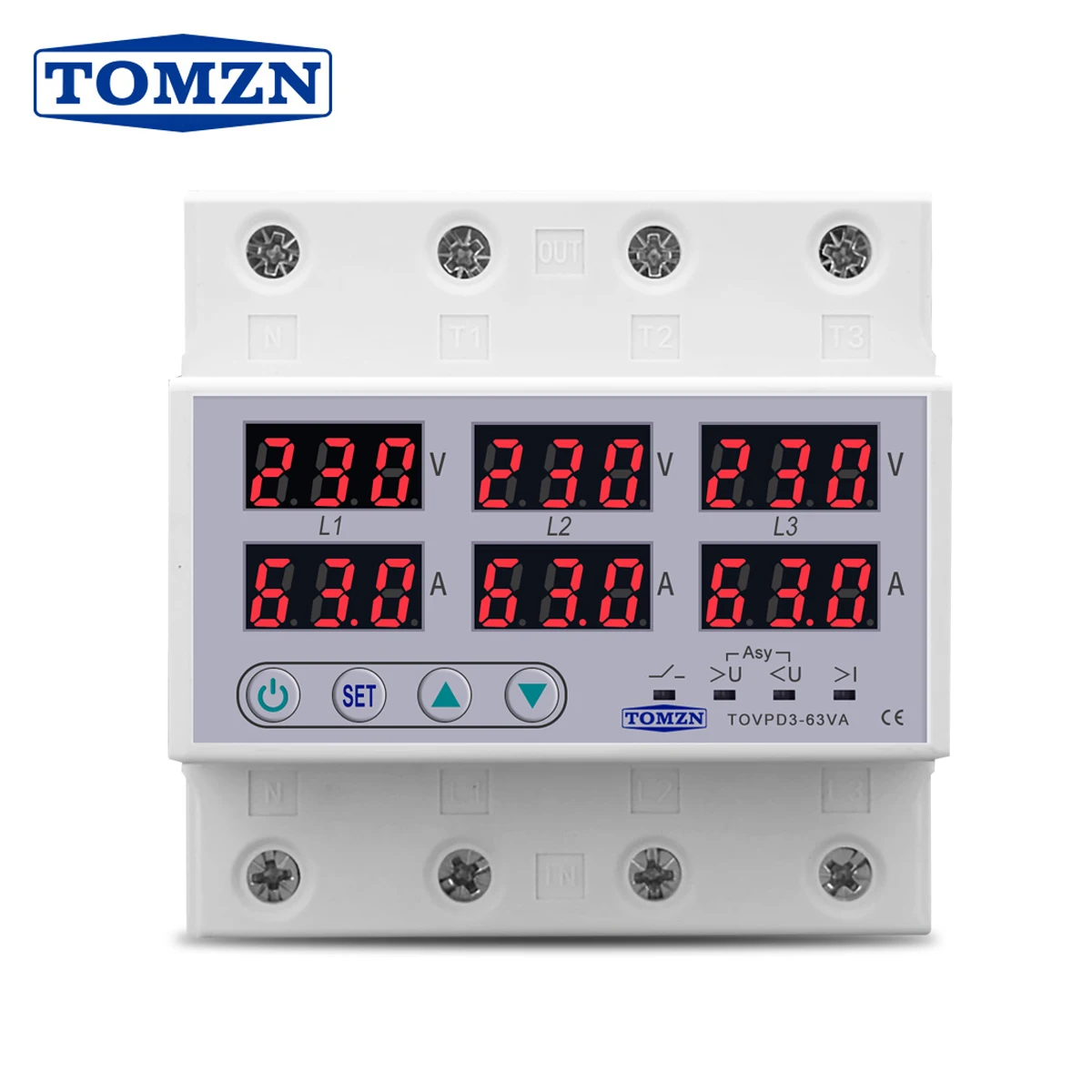
Some 3 phase voltage protector models integrate overcurrent protection alongside voltage monitoring, providing a more comprehensive layer of defense within a single device. Overcurrent conditions — where load current exceeds the rated capacity of the circuit — can result from mechanical overloads, short circuits, or the elevated current draw that accompanies undervoltage conditions. Combining overcurrent detection with voltage monitoring in a single 3 phase voltage protector simplifies panel design and ensures that both fault types are addressed by a coordinated protection strategy.
The integration of overcurrent protection is especially relevant for motor-driven applications, where the relationship between voltage and current is direct and consequential. A motor operating under low voltage draws higher current; if the 3 phase voltage protector detects the undervoltage condition and disconnects the load before the overcurrent threshold is reached, it prevents a more severe fault from developing. This layered response logic is a hallmark of well-engineered protection technology.
Conditions That Determine Downtime Reduction Effectiveness
Correct Sizing and Application Matching
The downtime reduction potential of a 3 phase voltage protector is only realized when the device is correctly sized for the application. A protection device rated for a lower current than the connected load will either fail to operate correctly or become a point of failure itself. Conversely, an oversized device may lack the sensitivity needed to detect faults at the load level. Matching the current rating of the 3 phase voltage protector to the actual load current — with appropriate safety margins — is a fundamental requirement for effective protection.
Application context also matters. A 3 phase voltage protector installed on a critical production motor in a continuous manufacturing environment should be configured with tighter thresholds and shorter response times than one protecting a non-critical auxiliary system. Understanding the criticality, duty cycle, and voltage sensitivity of each protected load allows engineers to configure the 3 phase voltage protector for maximum effectiveness in each specific context.
Installation Position and System Architecture
Where a 3 phase voltage protector is installed within the electrical distribution architecture significantly affects its ability to reduce downtime. A device installed at the main distribution panel protects all downstream loads from supply-side faults but may not detect load-side issues such as a failing motor drawing excessive current. Installing individual 3 phase voltage protector units at critical load points provides more granular protection and allows faults to be isolated without affecting the entire distribution system.
In larger facilities, a layered protection strategy — combining supply-side monitoring with load-level 3 phase voltage protector devices — provides the most comprehensive downtime risk reduction. Supply-side protection handles grid-originated faults such as utility voltage swings and phase loss events, while load-level protection addresses equipment-specific anomalies. This architecture ensures that no single fault type can propagate undetected through the system.
Threshold Calibration and Commissioning
A 3 phase voltage protector that is installed but not properly calibrated provides limited protection value. Default factory settings may not align with the actual voltage tolerance of the connected equipment or the normal operating characteristics of the local supply. Commissioning a 3 phase voltage protector correctly requires measuring the actual supply voltage under normal operating conditions, understanding the voltage tolerance specifications of the connected loads, and setting thresholds that provide meaningful protection without generating nuisance trips.
Periodic recalibration is also advisable, particularly in facilities where the electrical load profile changes over time. Adding new equipment, reconfiguring distribution circuits, or changes in utility supply characteristics can all shift the operating context in ways that affect the appropriateness of existing threshold settings. Treating the 3 phase voltage protector as a set-and-forget device undermines its long-term effectiveness.
Practical Downtime Scenarios Where Protection Delivers Clear Value
Motor-Driven Production Equipment
Electric motors are the most common load in industrial three-phase systems and among the most vulnerable to voltage irregularities. A 3 phase voltage protector installed on motor circuits provides direct protection against the fault types most likely to cause motor failure — phase loss, phase imbalance, overvoltage, and undervoltage. By disconnecting the motor before damaging conditions can cause winding failure or bearing damage, the protection device preserves the motor's service life and prevents the extended downtime associated with motor rewinding or replacement.
In production environments where motors drive critical processes — pumps, compressors, conveyors, mixers — the downtime cost of a single motor failure can far exceed the cost of the entire protection system. A 3 phase voltage protector on each critical motor circuit is a straightforward risk mitigation measure with a clear and calculable return on investment.
HVAC and Building Services Systems
Commercial and industrial HVAC systems rely on three-phase compressors and fan motors that are highly sensitive to voltage quality. Phase loss or severe imbalance in an HVAC compressor circuit can cause compressor failure within minutes, resulting in both equipment replacement costs and the operational disruption of losing climate control in a facility. A 3 phase voltage protector on HVAC compressor circuits is a standard protective measure in well-designed building electrical systems.
The automatic recovery feature of a modern 3 phase voltage protector is particularly valuable in HVAC applications, where brief utility voltage disturbances are common and manual reset requirements would place an unreasonable burden on building management staff. Automatic reconnection after supply restoration keeps HVAC systems running with minimal intervention while still providing full protection against sustained fault conditions.
Agricultural and Water Management Applications
Irrigation pump systems, water treatment facilities, and agricultural processing operations often operate in environments with less stable utility supply than urban industrial facilities. Voltage fluctuations caused by long distribution lines, variable loads from neighboring operations, and seasonal demand peaks make these applications particularly dependent on reliable 3 phase voltage protector technology. Pump motor failures in remote agricultural settings can result in crop losses or water supply interruptions that extend well beyond the direct cost of equipment repair.
In these contexts, the combination of adjustable voltage thresholds, automatic recovery, and robust overcurrent protection in a single 3 phase voltage protector device provides a comprehensive solution that reduces both the frequency and duration of downtime events. The ability to configure the device remotely or with minimal on-site adjustment is an additional practical advantage in unmanned or remotely monitored installations.
FAQ
Can a 3 phase voltage protector prevent all types of electrical downtime?
A 3 phase voltage protector is highly effective against voltage-related faults including overvoltage, undervoltage, phase loss, and phase imbalance. It does not protect against all possible causes of downtime — mechanical failures, control system faults, or downstream wiring issues fall outside its scope. However, since voltage irregularities are among the most common causes of electrical equipment failure in industrial settings, a properly configured 3 phase voltage protector addresses a significant portion of the downtime risk profile for most facilities.
How does automatic recovery in a 3 phase voltage protector reduce downtime duration?
Automatic recovery allows the 3 phase voltage protector to reconnect the protected load automatically once supply voltage returns to within acceptable limits, without requiring manual intervention. This is particularly valuable in unmanned or remotely monitored installations where a technician may not be immediately available. By eliminating the need for a site visit to reset the protection device after a transient fault, automatic recovery can reduce the duration of each interruption from hours to minutes.
What is the difference between adjustable and fixed-threshold 3 phase voltage protector devices?
Fixed-threshold devices use factory-set voltage limits that cannot be changed in the field. Adjustable devices allow the user to set custom overvoltage and undervoltage thresholds to match the specific tolerance requirements of the connected equipment and the normal operating characteristics of the local supply. Adjustable 3 phase voltage protector devices are generally preferred in industrial applications because they can be calibrated to avoid nuisance trips while still providing meaningful protection, and they can be reconfigured if the operating context changes.
Is a 3 phase voltage protector suitable for both new installations and retrofit applications?
Yes. A 3 phase voltage protector is designed for straightforward integration into both new panel builds and existing electrical installations. Most devices are DIN rail mountable and connect directly into the three-phase supply circuit, making retrofit installation practical without major panel redesign. For existing facilities experiencing recurring voltage-related equipment failures or unexplained downtime events, adding a 3 phase voltage protector to critical circuits is often one of the most cost-effective corrective actions available.
Table of Contents
- Understanding Voltage-Related Downtime in Three-Phase Systems
- How Modern 3 Phase Voltage Protector Technologies Work
- Conditions That Determine Downtime Reduction Effectiveness
- Practical Downtime Scenarios Where Protection Delivers Clear Value
-
FAQ
- Can a 3 phase voltage protector prevent all types of electrical downtime?
- How does automatic recovery in a 3 phase voltage protector reduce downtime duration?
- What is the difference between adjustable and fixed-threshold 3 phase voltage protector devices?
- Is a 3 phase voltage protector suitable for both new installations and retrofit applications?