
 EN
EN
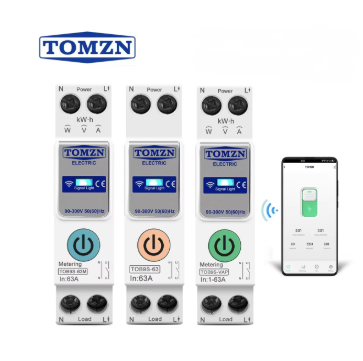
Every piece of industrial or commercial equipment operates within a defined electrical tolerance range. When voltage levels drift outside those boundaries — whether surging too high or dropping too low — the consequences can range from subtle performance degradation to catastrophic hardware failure. A voltage protector is specifically engineered to detect these deviations and respond before damage occurs, making it one of the most strategically important components in any electrical system designed for long-term reliability.
The question of whether voltage protector technologies can genuinely improve equipment lifespan is not merely theoretical. Facilities managers, electrical engineers, and procurement specialists across manufacturing, commercial real estate, and infrastructure sectors are increasingly treating voltage protection as a core investment rather than an optional add-on. Understanding how these devices work, what failure modes they prevent, and how they integrate into broader electrical systems is essential for making informed decisions about long-term asset management.
The Relationship Between Voltage Instability and Equipment Degradation
How Overvoltage Accelerates Component Wear
Overvoltage conditions occur when the supply voltage exceeds the rated maximum for connected equipment. Even brief overvoltage events — lasting only milliseconds — can generate excess heat within motor windings, capacitors, and semiconductor components. Over time, this thermal stress breaks down insulation materials, reduces dielectric strength, and causes premature aging of components that would otherwise last for years.
In motors and compressors, sustained overvoltage increases current draw beyond design parameters, accelerating winding insulation failure. In sensitive electronics, overvoltage can permanently damage integrated circuits or cause latent defects that manifest as intermittent failures weeks or months later. A properly configured voltage protector interrupts supply before these stress levels accumulate, preserving the integrity of connected loads.
The cumulative nature of overvoltage damage is what makes it particularly dangerous. A single event may not cause visible failure, but repeated exposure shortens the effective service life of equipment significantly. Facilities that operate without a voltage protector in place are essentially allowing this silent degradation to proceed unchecked.
How Undervoltage Creates Hidden Stress
Undervoltage is often underestimated as a risk factor, yet it is equally capable of reducing equipment lifespan. When voltage drops below the minimum operating threshold, motors must draw higher current to maintain torque output. This increased current generates additional heat, stressing windings and bearings in ways that are not immediately visible but are measurable over time.
For three-phase systems, voltage imbalance combined with undervoltage creates uneven loading across phases, which is a leading cause of motor burnout in industrial environments. A voltage protector that monitors both over and under voltage conditions — and responds to imbalance — provides a far more comprehensive layer of defense than simple fuse or breaker protection alone.
Refrigeration systems, HVAC units, and pumping equipment are particularly vulnerable to undervoltage stress because they operate continuously and rely on consistent voltage to maintain efficiency. Deploying a voltage protector in these applications directly addresses one of the most common causes of unplanned downtime and early replacement cycles.
Core Technologies Inside a Modern Voltage Protector
Sensing and Threshold Detection Mechanisms
Modern voltage protector devices use precision voltage sensing circuits to continuously monitor incoming supply voltage against user-defined or factory-set thresholds. Adjustable models allow operators to set both the upper overvoltage trip point and the lower undervoltage trip point, tailoring protection to the specific sensitivity of connected equipment. This flexibility is critical in environments where equipment tolerances vary across a single installation.
The sensing circuit compares real-time voltage readings against the programmed thresholds at high sampling rates. When a deviation is detected, the voltage protector initiates a trip signal within milliseconds, disconnecting the load before sustained damage can occur. The speed of this response is a key differentiator between a voltage protector and conventional overcurrent protection devices, which are not designed to respond to voltage-level anomalies.
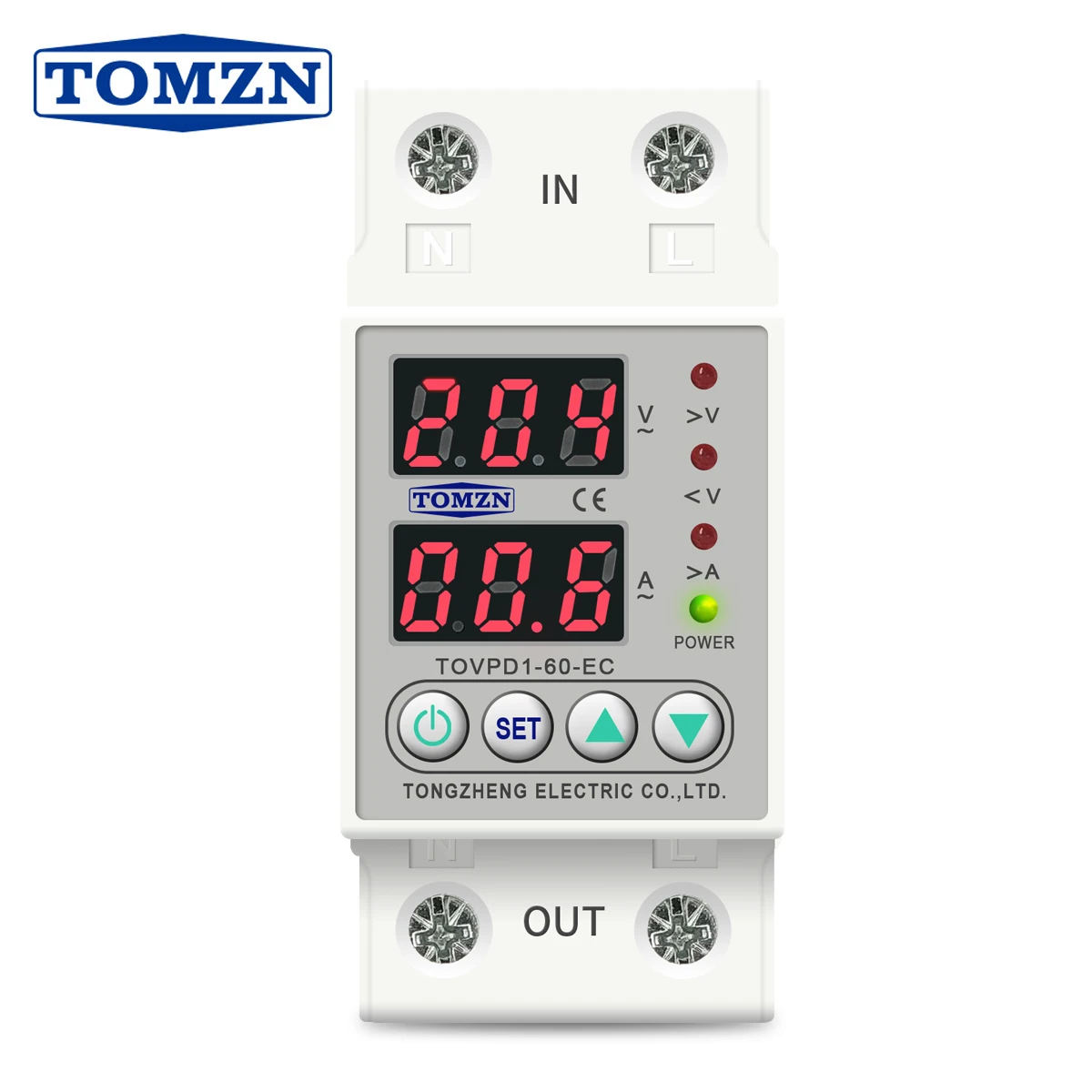
DIN rail-mounted voltage protector relays, such as those designed for 230V single-phase or three-phase systems, integrate this sensing logic into a compact form factor that fits directly into standard distribution boards. This makes them practical for both new installations and retrofit projects without requiring significant panel redesign.
Automatic Reconnection and Time-Delay Logic
One of the most operationally valuable features in a contemporary voltage protector is automatic reconnection with configurable time delay. After a trip event, the device monitors the supply voltage and, once stable conditions are confirmed for a set period, automatically restores power to the load. This eliminates the need for manual intervention after transient disturbances, reducing downtime in unmanned or remote installations.
The time-delay function serves a dual purpose. It prevents rapid cycling — where the device trips and reconnects repeatedly during an unstable supply condition — and it also allows connected equipment such as compressors and motors to fully de-pressurize or decelerate before restart, protecting mechanical components from restart stress.
This combination of fast trip response and intelligent reconnection logic is what distinguishes a well-engineered voltage protector from simpler surge suppression devices. The result is a system that actively manages the electrical environment rather than simply reacting to extreme events.
Application Scenarios Where Voltage Protectors Deliver the Most Value
Industrial Machinery and Motor-Driven Equipment
Industrial environments are among the highest-risk settings for voltage instability. Heavy machinery starting and stopping on shared circuits creates voltage sags that affect neighboring equipment. Welding operations, large compressors, and conveyor systems all introduce transient disturbances that propagate through the distribution network. Installing a voltage protector at the panel level or directly upstream of sensitive loads provides a consistent barrier against these disturbances.
For motor-driven equipment specifically, the voltage protector acts as a first line of defense against the two most common causes of motor failure: thermal overload from overvoltage and winding stress from undervoltage. Facilities that have implemented voltage protector devices on critical motor circuits consistently report extended intervals between motor rewinding or replacement events.
The economic case is straightforward. A single motor replacement in an industrial setting can cost several times the price of a voltage protector installation. When that motor drives a critical process, the cost of unplanned downtime adds another significant multiplier to the total impact. Proactive voltage protection is a low-cost intervention relative to the asset value it preserves.
Commercial Buildings and HVAC Systems
Commercial buildings face voltage quality challenges that are often underappreciated. Grid-supplied voltage in urban and suburban areas can fluctuate due to demand peaks, utility switching events, and nearby industrial loads. HVAC systems, elevators, and lighting control systems in these buildings are all sensitive to sustained voltage deviations, even if they can tolerate brief transients.
A voltage protector installed at the main distribution board or at sub-panel level provides building-wide protection that benefits all connected systems simultaneously. For property managers focused on reducing maintenance costs and extending the service life of capital equipment, this represents a highly cost-effective infrastructure investment.
In data center and server room environments, voltage stability is even more critical. While uninterruptible power supplies handle outages, a voltage protector addresses the more frequent and often overlooked problem of sustained overvoltage or undervoltage from the utility feed, which UPS systems alone do not correct.
Selecting the Right Voltage Protector for Long-Term Performance
Key Specification Criteria
Choosing the appropriate voltage protector requires matching device specifications to the electrical characteristics of the installation. Current rating is the primary sizing parameter — the device must be rated to handle the full load current of the circuit it protects without thermal stress on its own internal components. For a 60A circuit, a 60A-rated voltage protector relay is the correct starting point.
Voltage rating and phase configuration must also align with the supply system. A 230V single-phase voltage protector is appropriate for residential and light commercial applications, while three-phase models are required for industrial motor circuits. Adjustability of trip thresholds is a significant advantage in applications where equipment tolerances are known and can be programmed precisely, rather than relying on fixed factory settings.
Response time, reconnection delay range, and the presence of visual status indicators are secondary but important criteria. A voltage protector that provides clear visual feedback on its operating state simplifies troubleshooting and gives maintenance personnel immediate insight into whether a trip event has occurred and why.
Installation and Integration Considerations
DIN rail mounting has become the standard form factor for voltage protector relays used in distribution panels, and for good reason. It allows the device to be integrated directly into existing panel infrastructure without custom mounting hardware, reducing installation time and cost. The compact footprint of modern voltage protector relays means that protection can be added to panels with limited spare space.
Wiring configuration should follow the manufacturer's schematic precisely, particularly for devices that include both line-side and load-side terminals with separate control outputs. Incorrect wiring can result in the voltage protector failing to disconnect the load during a fault condition, negating its protective function entirely.
Periodic functional testing is also recommended as part of a preventive maintenance program. A voltage protector that has not been tested may have developed internal faults that prevent it from operating correctly when needed. Most modern devices support manual trip testing without requiring the circuit to be de-energized, making this a straightforward maintenance task.
FAQ
Can a voltage protector extend the lifespan of motors and compressors?
Yes, a voltage protector directly addresses the two primary electrical causes of premature motor and compressor failure: overvoltage-induced thermal stress and undervoltage-induced overcurrent. By disconnecting the load when voltage deviates beyond safe thresholds, the voltage protector prevents the cumulative damage that shortens service life. Facilities that deploy voltage protector devices on motor circuits typically see measurable reductions in maintenance frequency and replacement costs over multi-year periods.
Is a voltage protector the same as a surge protector?
No, these are distinct device categories with different protective functions. A surge protector is designed to clamp or absorb very brief, high-energy transient spikes — typically lasting microseconds — that originate from lightning strikes or switching events. A voltage protector monitors sustained voltage levels over time and disconnects the load when the supply voltage remains outside acceptable bounds for a defined period. Both devices address different threat profiles, and in many installations, both are used together for comprehensive protection.
How do I know if my equipment needs a voltage protector?
If your facility experiences frequent equipment failures, unexplained motor burnouts, or shortened component lifespans, voltage instability is a likely contributing factor. Installing a power quality meter or data logger to record voltage levels over several days will reveal whether overvoltage or undervoltage conditions are present. If deviations beyond equipment tolerances are confirmed, deploying a voltage protector on affected circuits is a direct and cost-effective corrective action.
Does a voltage protector work with both single-phase and three-phase systems?
Voltage protector devices are available in both single-phase and three-phase configurations. Single-phase models are suitable for residential, light commercial, and individual equipment protection applications. Three-phase voltage protector relays additionally monitor for phase loss and phase imbalance conditions, which are critical failure modes in industrial motor applications. Selecting the correct phase configuration is essential to ensure the device provides the full scope of protection required for the installation.