
 EN
EN
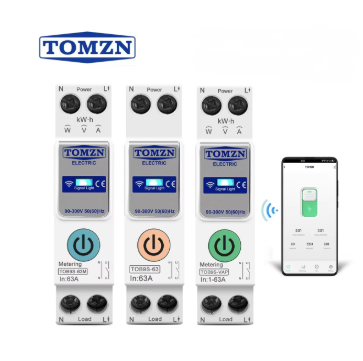
Managing electrical systems across multiple sites or even within a single facility has always demanded significant time, labor, and reactive decision-making. The introduction of the wifi breaker has fundamentally changed that dynamic, giving facility managers, engineers, and business owners the ability to monitor and control power circuits from virtually anywhere. Rather than relying on manual inspections or on-site personnel to check circuit status, a wifi breaker connects your electrical infrastructure directly to a digital interface accessible through a smartphone or web dashboard.
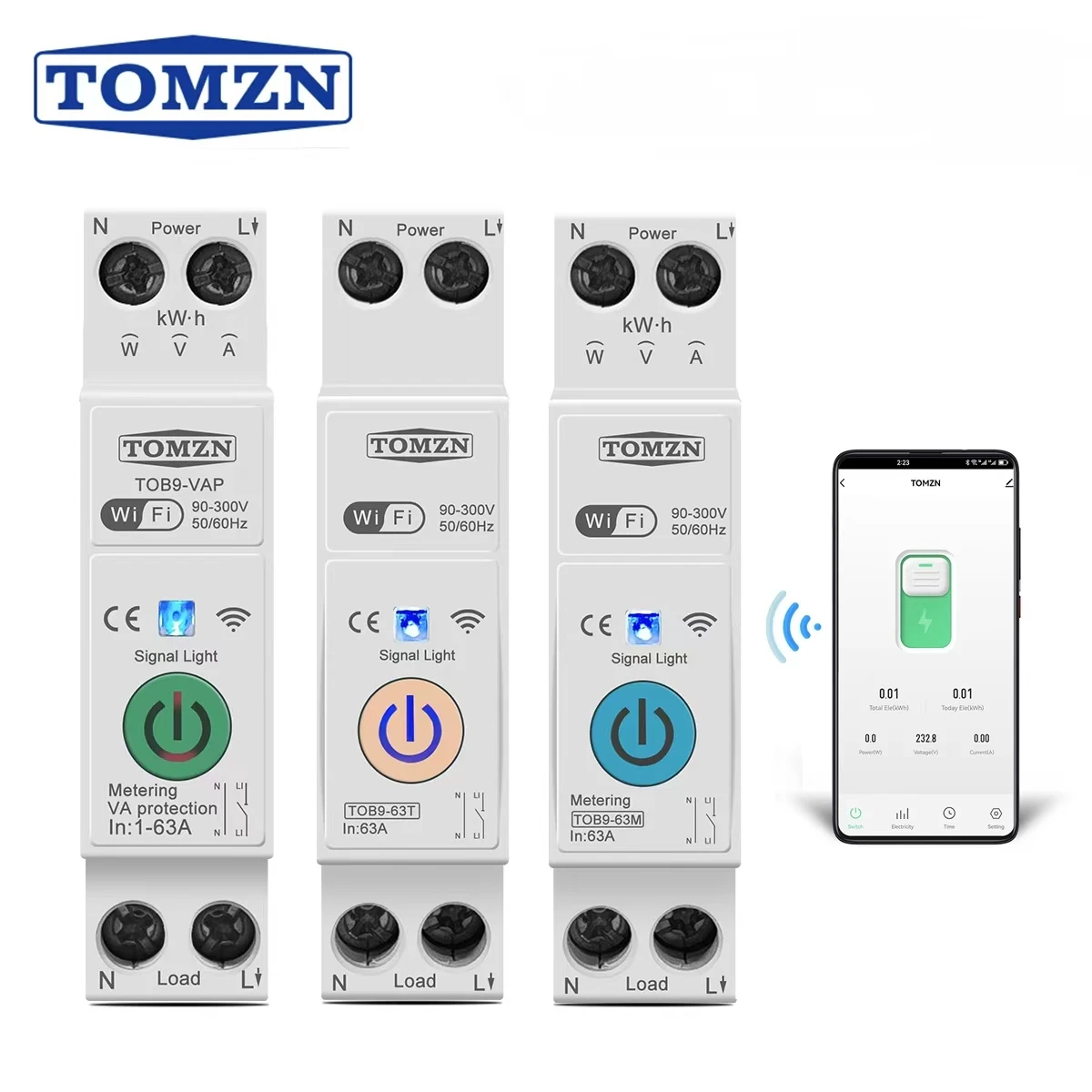
The benefits of integrating a wifi breaker into a remote power monitoring strategy extend well beyond simple convenience. From real-time energy consumption data to automated fault responses and cost-reduction opportunities, this technology addresses the core operational challenges that industrial and commercial facilities face every day. Understanding exactly what these benefits are — and how they translate into measurable value — is essential for any organization evaluating a smarter approach to power management.
Real-Time Visibility Into Power Consumption
Continuous Data Streaming From Every Circuit
One of the most immediate benefits a wifi breaker delivers is uninterrupted, real-time visibility into how power is being consumed across individual circuits. Traditional circuit breakers are passive devices — they trip when overloaded and otherwise provide no data. A wifi breaker, by contrast, continuously measures current, voltage, power factor, and kilowatt-hour consumption, streaming that data to a connected platform at regular intervals.
This level of granularity allows facility teams to identify which circuits are drawing the most energy, at what times of day, and whether consumption patterns align with operational expectations. For a manufacturing plant running multiple production lines, this means being able to pinpoint inefficiencies at the circuit level rather than relying on aggregate utility bills that arrive weeks after the fact.
The wifi breaker essentially transforms a passive protection device into an active data source, feeding a continuous stream of actionable intelligence into your monitoring system without requiring additional sensors or metering hardware.
Remote Dashboard Access for Distributed Teams
Remote power monitoring only delivers its full value when the data is accessible to the right people at the right time. A wifi breaker integrates with cloud-based platforms and mobile applications, meaning that an energy manager working from a central office can view the live status of circuits located in a warehouse, retail outlet, or remote facility hundreds of kilometers away.
This remote accessibility eliminates the need to dispatch technicians for routine status checks, reducing both labor costs and response times. When a circuit shows abnormal consumption or a fault condition, the relevant team member receives an alert directly on their device and can assess the situation immediately, regardless of their physical location.
For organizations managing multiple sites, the wifi breaker creates a unified monitoring layer that consolidates power data from all locations into a single interface, making comparative analysis and centralized decision-making far more practical.
Proactive Fault Detection and Faster Response
Automated Alerts Before Problems Escalate
Reactive maintenance — waiting for a fault to cause downtime before addressing it — is one of the most costly approaches to electrical system management. A wifi breaker supports a proactive model by enabling threshold-based alerts that notify operators when a circuit's behavior deviates from normal parameters. If current draw exceeds a set limit, if voltage drops unexpectedly, or if a circuit trips during off-hours, an alert is generated and delivered instantly.
This early warning capability is particularly valuable in environments where electrical faults can cascade into equipment damage, production stoppages, or safety incidents. By catching anomalies early, maintenance teams can investigate and resolve issues during planned windows rather than scrambling during unplanned outages.
The wifi breaker's alerting logic can typically be customized to match the specific sensitivity requirements of different circuits, ensuring that critical loads receive tighter monitoring while less sensitive circuits operate with broader tolerances.
Remote Trip and Reset Capabilities
Beyond monitoring, a wifi breaker also enables remote control actions — most notably the ability to trip or reset a circuit without physical access to the panel. In a scenario where a fault is detected on a non-critical circuit at an unmanned facility, an operator can remotely isolate that circuit to prevent further damage while arranging for a technician to visit at a scheduled time.
This remote actuation capability significantly reduces the urgency and cost of emergency call-outs. Instead of sending a technician to a remote site at night or on a weekend simply to reset a breaker, the operation can be handled remotely in seconds. The wifi breaker effectively extends the reach of your electrical team without requiring additional headcount.
For facilities with strict uptime requirements, the ability to remotely restore power to a circuit after a fault has been assessed and cleared can mean the difference between a minor interruption and a prolonged outage with significant operational consequences.
Energy Efficiency and Cost Reduction
Identifying Energy Waste at the Circuit Level
Energy waste in commercial and industrial facilities is rarely obvious from utility bills alone. It hides in standby loads, inefficient equipment, and circuits that remain energized long after they are needed. A wifi breaker exposes this waste by providing circuit-level consumption data that makes it possible to identify exactly where energy is being used unnecessarily.
For example, monitoring data from a wifi breaker might reveal that HVAC circuits in unoccupied zones are running at full load during weekends, or that lighting circuits in storage areas are never switched off overnight. These insights, which would be invisible without circuit-level monitoring, translate directly into actionable energy-saving measures.
Over time, the cumulative effect of these optimizations can produce meaningful reductions in energy expenditure, with the wifi breaker's monitoring data providing the evidence base needed to justify further investment in efficiency improvements.
Scheduled Control to Align Power Use With Operations
A wifi breaker typically supports timer and scheduling functions that allow circuits to be automatically switched on or off according to a predefined timetable. This capability is directly relevant to energy cost reduction, particularly in markets where electricity tariffs vary by time of day. By scheduling high-consumption loads to operate during off-peak tariff periods, facilities can reduce their energy costs without changing their operational output.
Scheduling also supports operational discipline — ensuring that non-essential loads are de-energized outside of working hours without relying on manual switching by staff. The wifi breaker enforces these schedules automatically, removing the human error factor from energy management routines.
When combined with real-time monitoring data, scheduled control through a wifi breaker creates a closed-loop energy management system that continuously aligns power consumption with actual operational needs.
Scalability and Integration in Modern Power Infrastructure
Fitting Into Existing Electrical Panels Without Major Retrofits
One practical concern when evaluating any new monitoring technology is the complexity and cost of installation. A wifi breaker is designed to fit into standard DIN-rail panel configurations, meaning it can replace or supplement conventional circuit breakers without requiring significant panel modifications or additional metering infrastructure.
This form factor compatibility makes the wifi breaker an accessible upgrade path for facilities that want to add remote monitoring capabilities to existing electrical systems. The installation process is comparable to replacing a standard breaker, and the wireless connectivity eliminates the need for additional data cabling between the panel and a monitoring system.
For organizations rolling out remote power monitoring across multiple sites, this ease of installation translates into faster deployment timelines and lower per-site implementation costs, making the business case for a wifi breaker-based monitoring strategy considerably more straightforward.
Platform Compatibility and Smart Building Integration
Modern facilities increasingly operate within broader smart building or industrial IoT ecosystems, and a wifi breaker is designed to participate in these environments. Compatibility with platforms such as Tuya and SmartLife means that the wifi breaker can be integrated into existing automation workflows, voice control systems, and centralized building management interfaces.
This integration capability allows the wifi breaker to function not just as a standalone monitoring device but as a connected node within a larger intelligent infrastructure. Power data from the wifi breaker can feed into energy management systems, trigger automation rules based on consumption thresholds, or contribute to sustainability reporting dashboards.
As organizations expand their digital infrastructure, the wifi breaker's connectivity and platform compatibility ensure that it remains a relevant and functional component of an evolving smart facility strategy rather than becoming an isolated legacy device.
Operational Transparency and Compliance Support
Audit-Ready Energy Records
Regulatory and corporate sustainability requirements increasingly demand detailed records of energy consumption at the asset or circuit level. A wifi breaker generates and stores historical consumption data that can be exported for compliance reporting, energy audits, or sustainability disclosures. This removes the need for manual data collection and reduces the risk of gaps or inaccuracies in energy records.
For facilities subject to energy efficiency regulations or participating in voluntary sustainability programs, the wifi breaker provides a reliable and automated data trail that supports both internal reporting and third-party verification. The granularity of circuit-level data also makes it easier to attribute consumption to specific processes, departments, or cost centers.
Having accurate, timestamped consumption records from every wifi breaker in a facility gives energy managers a credible foundation for demonstrating progress toward efficiency targets and identifying areas where further improvement is needed.
Accountability and Operational Discipline Across Sites
Remote power monitoring through a wifi breaker also introduces a layer of operational accountability that is difficult to achieve with conventional electrical systems. When every circuit's status and consumption is visible in real time to management, there is a natural incentive for site teams to maintain proper energy discipline — switching off non-essential loads, reporting faults promptly, and adhering to scheduled operating windows.
This transparency is particularly valuable for organizations managing distributed networks of facilities where direct supervision is limited. The wifi breaker effectively extends management visibility into every panel room, creating a consistent standard of operational oversight regardless of site location or staffing levels.
Over time, this combination of data visibility and remote control capability helps organizations build a culture of energy awareness and operational discipline that compounds the efficiency gains delivered by the wifi breaker technology itself.
FAQ
How does a wifi breaker differ from a standard smart plug or energy monitor?
A wifi breaker operates at the circuit breaker level within an electrical panel, providing both protection and monitoring for entire circuits rather than individual outlets. Unlike a smart plug, which monitors a single device, a wifi breaker covers all loads connected to that circuit and also provides overcurrent protection, remote trip capability, and kilowatt-hour metering — making it a far more comprehensive solution for facility-level power monitoring.
Is a wifi breaker suitable for industrial environments with high current loads?
Yes, wifi breakers are available in ratings suitable for industrial applications, with models supporting current ratings up to 63A and configurations for single-phase or multi-phase circuits. The key is selecting a wifi breaker with the appropriate current rating, breaking capacity, and protection class for the specific circuit and environment. For high-demand industrial circuits, it is important to verify that the selected device meets the relevant electrical standards for the installation.
What happens to a wifi breaker if the internet connection is lost?
A wifi breaker continues to function as a conventional circuit breaker even when the internet connection is unavailable — it will still provide overcurrent and short-circuit protection for the connected circuit. Remote monitoring and control functions will be suspended until connectivity is restored, but the device does not lose its core protective function. Some models also retain locally stored consumption data that is synchronized once the connection is re-established.
Can a wifi breaker be integrated with existing building management systems?
Many wifi breakers support integration with popular smart home and building automation platforms through standard protocols and APIs. Compatibility depends on the specific platform and the wifi breaker model, so it is advisable to confirm integration support before deployment. For facilities using established IoT platforms, a wifi breaker that supports those ecosystems can be incorporated into existing automation rules, dashboards, and reporting workflows with relatively straightforward configuration.