
 EN
EN
Circuit breakers serve as critical safety components in electrical systems, protecting equipment and personnel from overcurrent conditions. While alternating current circuit breakers have dominated traditional electrical installations for decades, the growing adoption of solar energy systems and electric vehicle charging infrastructure has increased demand for direct current protection devices. Understanding the fundamental differences between DC and AC circuit breakers becomes essential for engineers, installers, and system designers working with modern electrical applications.
Fundamental Operating Principles
Arc Extinction Mechanisms in DC Systems
Direct current circuit breakers face unique challenges when interrupting electrical faults due to the continuous nature of DC power flow. Unlike alternating current that naturally crosses zero twice per cycle, DC maintains constant voltage and current levels until physically interrupted. This characteristic makes arc extinction significantly more challenging in DC applications, requiring specialized contact materials and chamber designs to effectively quench electrical arcs.
The arc extinction process in dc mcb devices relies on magnetic blowout coils and specialized arc chutes that forcibly elongate and cool the arc until it can no longer sustain itself. Advanced designs incorporate permanent magnets to create magnetic fields that rapidly move the arc away from contact points, preventing damage to critical components during interruption events.
AC Current Zero Crossing Advantage
Alternating current systems benefit from natural current zero crossings that occur 120 times per second in standard 60Hz systems. These zero crossing points provide optimal opportunities for arc extinction, as the current momentarily drops to zero and the arc naturally extinguishes. AC circuit breakers leverage this phenomenon by timing their contact separation to coincide with these natural interruption points.
The predictable nature of AC waveforms allows circuit breaker manufacturers to optimize contact timing and arc chamber designs for maximum efficiency. This inherent advantage results in simpler mechanical designs and often more cost-effective solutions for traditional alternating current applications compared to their direct current counterparts.
Contact Design and Materials
Enhanced Contact Systems for DC Applications
Direct current circuit breakers require specialized contact materials and configurations to handle the sustained arcing conditions inherent in DC interruption. Silver-cadmium oxide contacts are commonly employed in dc mcb applications due to their superior arc resistance and low contact resistance properties. These materials maintain stable performance even after repeated switching operations under challenging DC fault conditions.
The contact arrangement in DC breakers often features double-break or series-connected contacts to effectively share the voltage stress during interruption. This design approach distributes the electrical stress across multiple contact points, reducing the likelihood of contact welding and extending operational life under demanding switching conditions.
AC Circuit Breaker Contact Considerations
Alternating current circuit breakers typically utilize silver-tungsten or silver-tin oxide contact materials that perform well under the cyclical nature of AC power systems. The periodic current reversals in AC applications create different wear patterns and thermal cycling compared to DC systems, allowing for optimized contact alloys that balance conductivity, durability, and cost considerations.
Single-break contact configurations are often sufficient for AC applications due to the natural current zero crossings that facilitate easier arc interruption. This simpler contact arrangement contributes to more compact designs and reduced manufacturing complexity in traditional AC circuit protection devices.
Voltage and Current Ratings
DC System Voltage Considerations
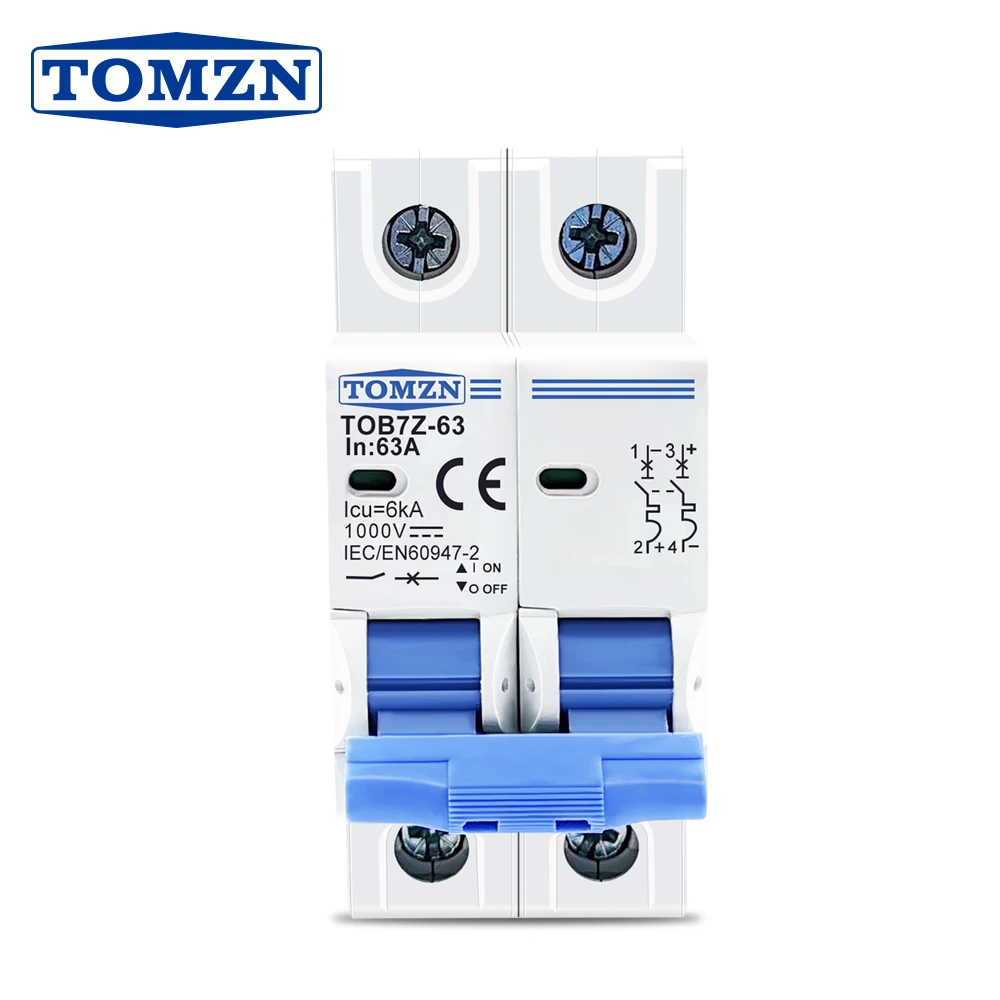
Photovoltaic systems and battery storage applications commonly operate at elevated DC voltages ranging from 600V to 1500V, requiring specialized dc mcb devices rated for these challenging conditions. The absence of natural current zero crossings necessitates higher voltage ratings to ensure reliable interruption capability across the full range of operating conditions.
Modern solar installations particularly benefit from dc mcb devices rated for 1000V or higher, enabling series connection of multiple photovoltaic panels while maintaining adequate safety margins. These higher voltage ratings require enhanced insulation systems and expanded contact separation distances to prevent flashover during fault interruption events.
AC Rating Standards and Applications
Standard alternating current systems operate at well-established voltage levels such as 120V, 240V, 480V, and 600V in North American markets. AC circuit breakers designed for these applications benefit from decades of standardization and optimization, resulting in mature product offerings with predictable performance characteristics across various load types and environmental conditions.
The established nature of AC voltage standards allows manufacturers to optimize circuit breaker designs for specific applications, from residential lighting circuits to industrial motor control applications. This specialization results in highly efficient and cost-effective solutions tailored to particular market segments and installation requirements.
Application-Specific Requirements
Solar Energy System Protection
Photovoltaic installations require specialized dc mcb protection to safely isolate individual string circuits and provide overcurrent protection under various operating conditions. These applications present unique challenges including temperature cycling, moisture exposure, and the need for reliable operation across varying irradiance levels that affect system voltage and current characteristics.
Solar-specific dc mcb devices must accommodate the wide operating temperature ranges typically encountered in rooftop installations while maintaining consistent trip characteristics. Enhanced enclosure ratings and UV-resistant materials ensure long-term reliability in demanding outdoor environments where traditional AC breakers might not provide adequate protection.
Electric Vehicle Charging Infrastructure
Battery charging systems for electric vehicles increasingly utilize DC fast-charging technology that requires robust circuit protection capable of handling high current levels and rapid switching operations. DC charging stations often operate at 400V to 800V DC levels with current ratings exceeding 200 amperes, demanding specialized protection devices designed for these challenging applications.
The rapid growth of electric vehicle adoption drives continued innovation in dc mcb technology to meet the evolving requirements of charging infrastructure. Advanced trip curve characteristics and enhanced current-limiting capabilities help protect expensive charging equipment while ensuring safe and reliable operation for end users.
Installation and Maintenance Considerations
Safety Protocols for DC Systems
Working with DC electrical systems requires enhanced safety protocols due to the sustained arc potential and lack of natural current zero crossings that facilitate safe disconnection. Proper lockout procedures become critical when servicing systems protected by dc mcb devices, as inadvertent contact with live conductors can result in sustained arcing conditions that are difficult to extinguish.
Installation procedures must account for proper conductor routing and adequate clearances to prevent accidental contact during maintenance operations. The use of appropriate personal protective equipment and adherence to established safety procedures becomes even more critical in DC applications where traditional AC safety assumptions may not apply.
Maintenance Scheduling and Procedures
Regular inspection and testing of dc mcb devices requires specialized equipment capable of safely verifying trip characteristics under DC conditions. Standard AC test equipment may not provide accurate results when evaluating DC circuit breaker performance, necessitating investment in appropriate testing tools and training for maintenance personnel.
Preventive maintenance schedules should account for the potentially higher wear rates associated with DC interruption compared to AC applications. Contact inspection intervals may need adjustment based on actual switching frequency and the severity of interrupted fault currents in specific installations.
FAQ
What makes DC circuit breakers more expensive than AC versions
DC circuit breakers typically cost more due to their complex arc extinction systems, specialized contact materials, and enhanced voltage ratings required for reliable DC interruption. The absence of natural current zero crossings necessitates sophisticated magnetic blowout systems and premium contact alloys that increase manufacturing costs compared to standard AC breakers.
Can AC circuit breakers be used in DC applications
Using AC circuit breakers in DC applications is generally not recommended and may be unsafe. AC breakers rely on natural current zero crossings for proper operation and may not reliably interrupt DC faults. The voltage and current ratings for AC breakers are based on RMS values that do not directly translate to DC applications, potentially resulting in inadequate protection or safety hazards.
How do I select the proper DC circuit breaker rating
Proper dc mcb selection requires careful analysis of maximum system voltage, continuous current requirements, and available fault current levels. Consider derating factors for temperature, altitude, and enclosure conditions while ensuring the breaker's DC voltage rating exceeds the maximum system voltage by appropriate safety margins. Consult manufacturer specifications and applicable electrical codes for specific application requirements.
What maintenance is required for DC circuit breakers
DC circuit breaker maintenance includes regular visual inspection of contacts and arc chutes, verification of trip characteristics using appropriate DC test equipment, and cleaning of arc chambers and contact surfaces. Maintenance intervals should be based on switching frequency and environmental conditions, with more frequent inspections recommended for high-duty cycle applications or harsh operating environments.