
 EN
EN
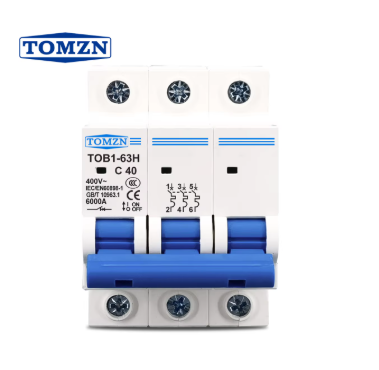
Commercial power distribution has always demanded a careful balance between reliability, safety, and operational continuity. In modern electrical infrastructure, the ac mcb — the alternating current miniature circuit breaker — has become one of the most fundamental protective devices deployed across offices, retail centers, industrial facilities, and multi-tenant buildings. As commercial loads grow more complex and energy consumption patterns become harder to predict, the role of the ac mcb in maintaining circuit integrity has expanded well beyond simple overcurrent interruption.
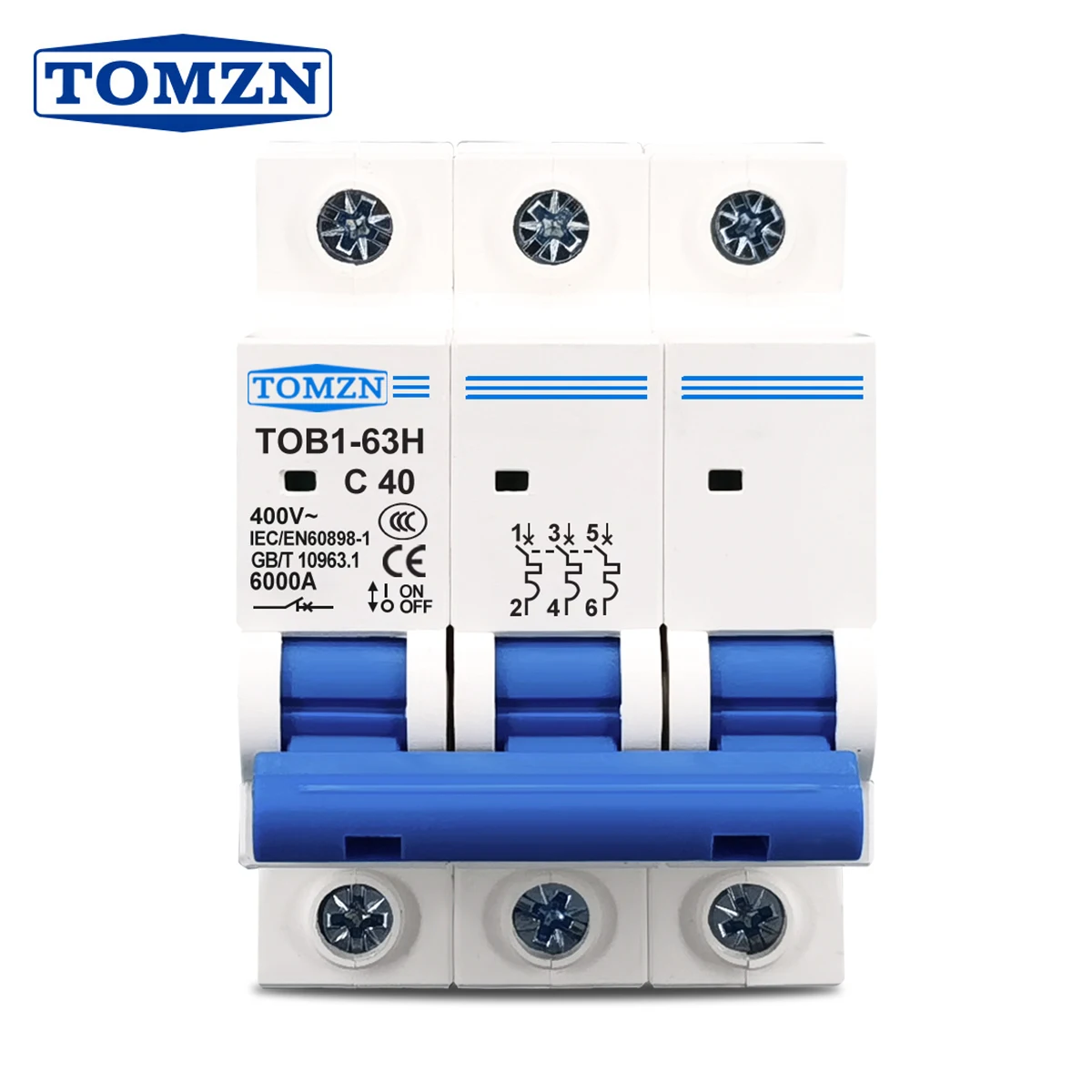
Understanding how an ac mcb system contributes to safer commercial power distribution requires looking beyond its physical form. These compact devices are engineered to respond instantly to fault conditions, protecting downstream equipment, reducing fire risks, and minimizing downtime. When properly specified and correctly integrated into a distribution board layout, the ac mcb becomes a critical line of defense that supports both electrical safety standards and operational efficiency across the entire commercial power network.
The Functional Role of AC MCB in Commercial Electrical Systems
Overcurrent Protection as the Core Safety Mechanism
At its core, the ac mcb is designed to detect and interrupt excessive current flow before it can damage conductors, insulation, or connected equipment. In commercial settings, this function is especially critical because circuits serve diverse loads — from HVAC compressors and lighting banks to server racks and kitchen equipment. Each of these loads has distinct startup and running current profiles, and the ac mcb must distinguish between temporary inrush spikes and genuine fault conditions without nuisance tripping.
The ac mcb achieves this through a dual-trip mechanism. A thermal element responds to sustained overloads by heating a bimetal strip that bends and triggers the breaker mechanism after a time-delay proportional to the overload magnitude. Simultaneously, a magnetic solenoid element responds almost instantaneously to short-circuit currents, providing near-zero-delay interruption when currents reach dangerous levels. This dual response ensures proportional protection across the entire fault-current spectrum that commercial circuits may encounter.
Matching the trip curve of the ac mcb to the load type is one of the most important specification decisions in commercial distribution design. A C-type ac mcb, for example, is designed for loads that draw moderate inrush currents, making it broadly suitable for commercial general-purpose circuits. Selecting the right trip characteristic prevents both unwanted trips during normal operation and delayed response during genuine faults.
Short-Circuit Current Interruption Capacity
One of the most technically demanding tasks an ac mcb must perform is safely interrupting short-circuit currents. In commercial buildings connected to medium-voltage substations or large transformer feeds, prospective short-circuit currents at the distribution panel can reach several kiloamperes. The ac mcb must not only detect this condition but must also physically extinguish the resulting arc within its arc chamber without sustaining damage or allowing the fault current to persist.
Modern ac mcb designs incorporate arc-splitter plates within their extinguishing chambers. When the breaker contacts separate under fault current, the arc is drawn into the splitter assembly, divided into multiple smaller arcs, and rapidly cooled and extinguished. This process must complete within fractions of a cycle to prevent thermal damage to the surrounding installation. The breaking capacity rating printed on every ac mcb — commonly expressed in kiloamperes — indicates the maximum short-circuit current the device can safely interrupt at its rated voltage.
For commercial distribution engineers, this rating must always exceed the maximum prospective fault current at the point of installation. Undersized breaking capacity is one of the most dangerous specification errors possible because an ac mcb that cannot interrupt the available fault current may not just fail — it may contribute to an explosion, fire, or sustained arc flash event. Proper coordination between upstream transformer ratings and the selected ac mcb specifications is therefore non-negotiable in professional commercial design practice.
How AC MCB Systems Enhance Safety at the Distribution Board Level
Selective Coordination and Fault Isolation
In commercial facilities with multiple distribution boards and sub-circuits, safety depends not only on individual ac mcb performance but on how the entire protection hierarchy works together. Selective coordination — also called discrimination — ensures that when a fault occurs, only the breaker closest to the fault opens, while upstream devices remain closed. This approach preserves power to unaffected parts of the building and minimizes the operational impact of localized electrical faults.
Achieving good coordination requires careful attention to the time-current characteristics of each ac mcb in the hierarchy. The downstream breaker must have a faster trip response at lower fault current levels than the upstream breaker at the same current magnitude. When this relationship is properly maintained, the ac mcb nearest to the fault will always respond first, isolating only the affected circuit while the rest of the distribution network continues to operate normally.
In practice, selective coordination for ac mcb systems in commercial buildings is often verified through coordination studies performed during the design phase. These studies plot the time-current curves of all breakers in series and confirm that their characteristics do not overlap in ways that would cause simultaneous tripping. This step is particularly important in facilities with critical loads such as data centers, hospitals, or continuous manufacturing operations where any unplanned power interruption carries serious consequences.
Integration with Residual Current Devices and Earth Leakage Protection
The ac mcb provides overcurrent and short-circuit protection, but it does not inherently protect against earth leakage or ground faults below the short-circuit threshold. In commercial environments, earth leakage currents can arise from damaged insulation, moisture ingress, or aging equipment, and these low-level faults may not be large enough to trip a standard ac mcb but are more than sufficient to create lethal electric shock hazards or sustained fire-ignition conditions.
To address this limitation, commercial distribution boards frequently combine ac mcb devices with residual current devices in a coordinated protection strategy. The residual current device monitors the balance between live and neutral currents and disconnects the circuit when even small earth leakage currents are detected. When paired with an ac mcb, this combination provides overlapping protection that covers the full range of electrical fault scenarios that a commercial building may experience.
Some ac mcb product families are available in combined formats that integrate residual current sensing into the same housing, simplifying board layouts and reducing wiring complexity. For commercial projects where panel space is limited and wiring labor costs are significant, these integrated solutions can offer practical advantages during both initial installation and future maintenance activities.
Voltage and Frequency Considerations for Commercial AC MCB Deployment
Single-Phase and Three-Phase Distribution Configurations
Commercial power distribution systems operate across a range of voltage configurations depending on regional standards and building requirements. Single-phase systems typically operate at 230V line-to-neutral, while three-phase systems operate at 400V line-to-line in many international markets. The ac mcb selected for any circuit must be rated to match the operating voltage of the system in which it is installed, as voltage rating directly affects the breaker's ability to safely extinguish arcs during interruption.
Three-pole ac mcb configurations are commonly used for three-phase circuits supplying large commercial loads such as motor drives, central air conditioning units, and three-phase distribution sub-boards. A three-pole ac mcb simultaneously opens all three phases during a trip event, which is essential for motor protection and for preventing single-phasing conditions that can damage three-phase equipment. For single-phase branch circuits, single-pole ac mcb units are used, often installed in rows within the same distribution board.
The frequency rating of an ac mcb — typically 50Hz or 60Hz — is another specification parameter that must match the local supply. While many modern ac mcb designs are rated for dual-frequency operation, confirming this specification is important in projects that may involve equipment or systems originally designed for different regional supply standards.
Current Rating Selection for Diverse Commercial Loads
Commercial buildings contain a wide variety of electrical loads, each with different current demands. Selecting the correct current rating for each ac mcb is one of the most consequential steps in distribution board design. An undersized ac mcb will trip repeatedly under normal load conditions, disrupting operations and creating maintenance burdens. An oversized ac mcb, on the other hand, may fail to protect the cable and connected equipment adequately, allowing sustained overloads that accelerate insulation degradation.
For general-purpose commercial circuits, ac mcb ratings typically range from 6A for low-demand lighting or small appliance circuits to 32A or 40A for larger dedicated loads. Higher-rated ac mcb units in the 50A to 63A range are often used for sub-distribution feeds or for protecting circuits supplying significant commercial equipment such as commercial refrigeration units or electric vehicle charging stations. Careful load analysis before specifying each ac mcb rating helps ensure that the protection is both effective and operationally transparent to building users.
Load diversity factors also influence ac mcb selection in commercial settings. Not all circuits within a building will be simultaneously loaded to their maximum rated current, and understanding the realistic demand profile of each circuit allows engineers to optimize breaker ratings without unnecessarily oversizing the distribution infrastructure.
Installation, Maintenance, and Long-Term Reliability of AC MCB Systems
Correct Installation Practices for Commercial Distribution Boards
The long-term reliability of any ac mcb installation depends heavily on the quality of the initial installation process. Each ac mcb must be correctly mounted on a DIN rail within the distribution board and securely terminated at both incoming and outgoing conductors. Loose terminal connections are one of the primary causes of ac mcb failure and fire risk in commercial buildings because they create resistance heating at the connection point that gradually degrades the terminal and surrounding insulation.
Conductor sizing must also be compatible with the ac mcb rating. Every ac mcb installed in a circuit is intended to protect a specific conductor cross-section, and using undersized cables behind an adequately rated ac mcb undermines the protection it provides. Commercial electrical contractors and project engineers should verify that conductor sizing, insulation type, and installation method are all aligned with the selected ac mcb rating and the applicable wiring regulations for the project's jurisdiction.
Torque specifications for terminal screws are often overlooked but are important for maintaining reliable connections over time. Most ac mcb manufacturers specify recommended torque values for their products, and using a calibrated torque screwdriver during installation ensures consistent, code-compliant connections across every device in the distribution board.
Periodic Testing and Inspection Protocols
Unlike fuses, the ac mcb is a resettable protective device that is expected to operate repeatedly over its service life. However, each time an ac mcb interrupts a significant fault current, its internal components experience mechanical stress and thermal cycling that can cumulatively affect its performance. A breaker that has operated several times under high-fault-current conditions should be inspected and potentially replaced, even if it appears to reset and function normally after each event.
Periodic testing of ac mcb installations in commercial buildings is a recommended practice under most electrical maintenance frameworks. Testing typically involves verifying that each breaker trips within the specified time-current band when a test current is applied, and confirming that the mechanical toggle mechanism operates smoothly without sticking or binding. These checks help identify aging or degraded ac mcb units before they fail to perform during an actual fault event.
Thermal imaging surveys of distribution boards can also be used to identify ac mcb units with abnormal heating patterns that may indicate poor connections, overloaded circuits, or internal component degradation. This non-invasive diagnostic technique is particularly valuable in large commercial facilities where distribution boards contain many breakers and manual inspection of every unit would be time-consuming.
FAQ
What does the C-type trip curve mean for an ac mcb used in commercial buildings?
The C-type trip curve indicates that the magnetic instantaneous trip of the ac mcb activates at between 5 and 10 times the rated current. This range is suitable for loads with moderate inrush currents, such as general commercial lighting, mixed office equipment circuits, and small motor loads. Choosing the correct trip curve for each application ensures the ac mcb provides reliable protection without nuisance tripping during normal load energization.
How many poles should an ac mcb have for a three-phase commercial circuit?
A three-phase commercial circuit should use a three-pole ac mcb so that all three phase conductors are simultaneously disconnected during a trip event. This prevents single-phasing, which can cause serious damage to three-phase motors and other balanced three-phase equipment. Single-pole ac mcb units are appropriate only for single-phase branch circuits within the same distribution system.
Can an ac mcb replace a fuse in a commercial distribution board?
An ac mcb can replace a fuse in most commercial distribution board applications, and in many cases offers significant operational advantages. Unlike a fuse that must be physically replaced after a fault, an ac mcb can be manually reset once the fault condition has been cleared. This resettable nature reduces maintenance time and eliminates the need to stock replacement fuse elements. However, the ac mcb must be rated for at least the same breaking capacity as the fuse it replaces to ensure equivalent fault protection.
How often should ac mcb units in commercial buildings be tested or inspected?
Most electrical maintenance guidelines recommend testing ac mcb installations at regular intervals, typically every one to three years depending on the criticality of the installation and local regulatory requirements. Testing should verify correct trip characteristics, smooth mechanical operation, and secure terminal connections. Facilities with high fault-current environments or frequent overload events may benefit from more frequent inspection cycles to catch degradation before it affects safety performance.