
 EN
EN
The evolution of power infrastructure has placed new and complex demands on every component within the electrical grid. At the center of this transformation is the circuit breaker, a device that was once purely mechanical and reactive but is now being reimagined as an intelligent, communicative, and proactive element of modern grid architecture. As smart grids expand across residential, commercial, and industrial sectors, the circuit breaker must evolve in parallel to handle bidirectional power flows, real-time data exchange, and dynamic load conditions that traditional designs were never built to manage.
Understanding how the circuit breaker is adapting to smart grid development requires looking beyond simple overcurrent protection. Today's grid integrates distributed energy resources, electric vehicle charging infrastructure, battery storage systems, and automated demand response programs. Each of these elements introduces new fault scenarios, voltage fluctuations, and communication requirements that push the circuit breaker into a far more sophisticated role than it has historically occupied. This article explores the specific technological adaptations taking place and why they matter for grid operators, facility managers, and electrical engineers alike.
The Shift from Passive Protection to Active Grid Participation
Why Traditional Circuit Breaker Designs Fall Short in Smart Grid Environments
A conventional circuit breaker operates on a straightforward principle: detect an overcurrent or short circuit condition and interrupt the flow of electricity to protect downstream equipment and wiring. This passive, threshold-based approach worked reliably for decades in grids where power flowed in one direction and load profiles were relatively predictable. However, smart grids fundamentally change both of these assumptions.
In a smart grid environment, power can flow from rooftop solar panels back into the distribution network, from battery storage systems during peak demand periods, or from vehicle-to-grid connections during grid stress events. A circuit breaker that only monitors current magnitude in one direction is poorly equipped to handle these scenarios. It may fail to detect reverse-flow faults, misinterpret normal bidirectional current as a fault condition, or trip unnecessarily during legitimate grid support operations.
Beyond directionality, smart grids also introduce high-frequency switching events, harmonic distortions from inverter-based resources, and rapid voltage transients that can confuse traditional trip mechanisms. The circuit breaker must now be capable of distinguishing between genuine fault conditions and the normal operational signatures of modern distributed energy equipment.
The Emergence of Intelligent Trip Units and Embedded Sensing
One of the most significant adaptations in circuit breaker technology is the replacement of simple thermal-magnetic trip mechanisms with intelligent electronic trip units. These units incorporate microprocessors, current transformers, and voltage sensors that continuously monitor multiple electrical parameters simultaneously. Rather than reacting to a single threshold, an intelligent trip unit can evaluate current waveform shape, rate of change, harmonic content, and power factor before making a trip decision.
This embedded intelligence allows the circuit breaker to apply zone-selective interlocking, where multiple breakers in a network communicate with each other to ensure that only the breaker closest to a fault operates, minimizing the scope of any outage. In a smart grid with multiple interconnected feeders and distributed generation points, this coordination capability is essential for maintaining grid stability and reducing unnecessary disconnections.
Embedded sensing also enables the circuit breaker to serve as a data collection node within the grid. Continuous measurement of voltage, current, power factor, and energy consumption transforms the circuit breaker from a purely protective device into a source of operational intelligence that grid management systems can use for load forecasting, fault analysis, and predictive maintenance scheduling.
Communication Protocols and IoT Integration in Modern Circuit Breaker Design
Connecting the Circuit Breaker to Grid Management Systems
Smart grid infrastructure depends on seamless communication between field devices and centralized or distributed management platforms. The modern circuit breaker is increasingly designed with built-in communication interfaces that support protocols such as Modbus, IEC 61850, DLMS/COSEM, and wireless standards including Wi-Fi and Zigbee. These interfaces allow the circuit breaker to transmit real-time status data, receive remote commands, and participate in automated grid management routines without requiring manual intervention.
IEC 61850, in particular, has become a foundational standard for substation automation and smart grid communication. A circuit breaker equipped with IEC 61850 compatibility can exchange standardized data objects with protection relays, energy management systems, and SCADA platforms, enabling coordinated protection schemes that respond to grid conditions in milliseconds. This level of integration was simply not possible with earlier generations of circuit breaker technology.
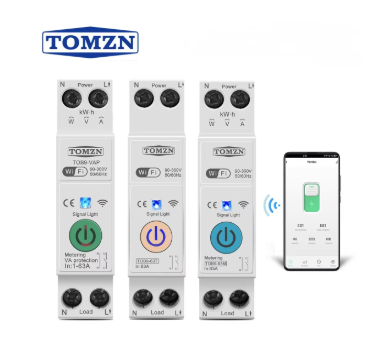
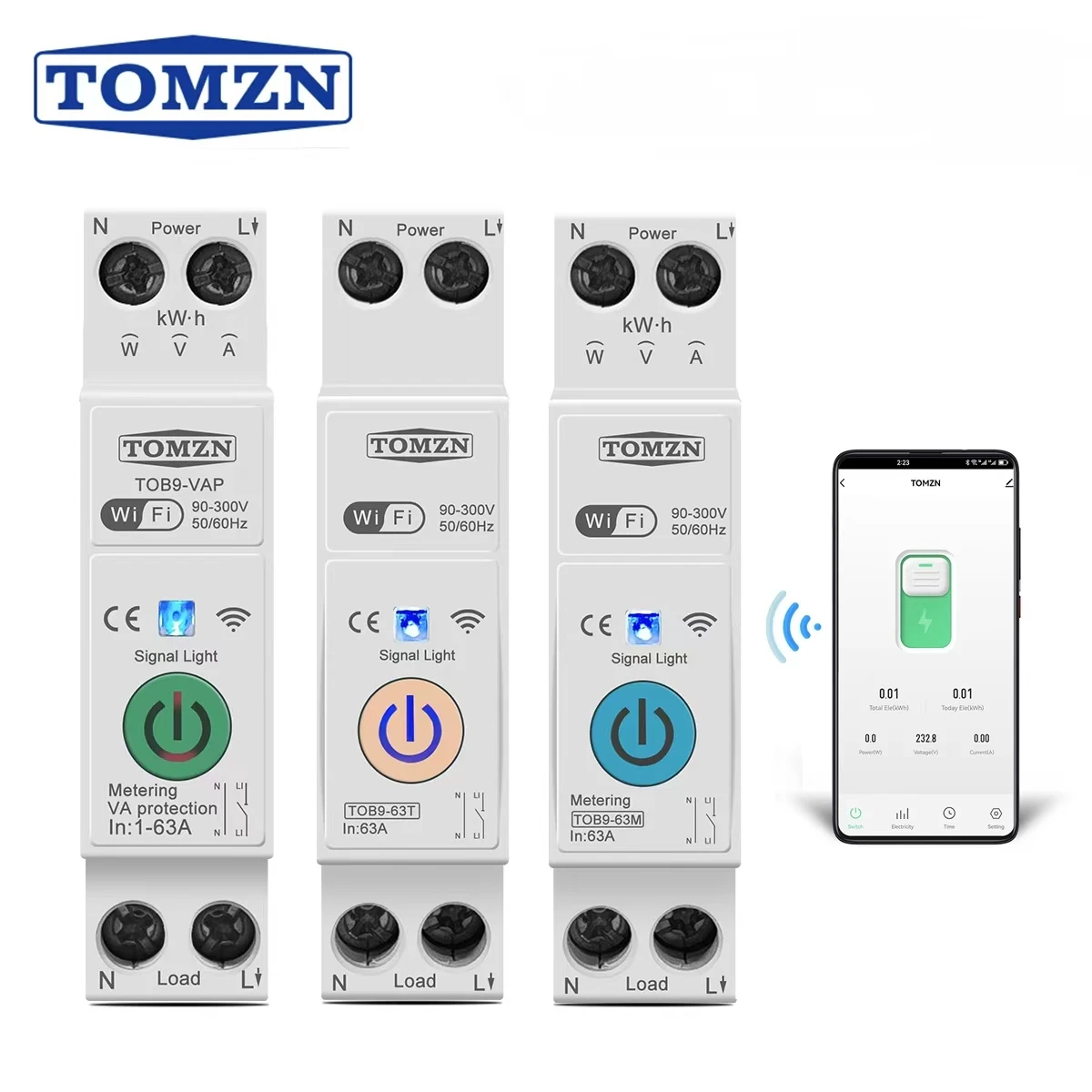
For applications at the building or facility level, Wi-Fi and Tuya-compatible circuit breaker devices are enabling a new category of smart energy management. These devices allow facility operators to monitor energy consumption in real time, set automated schedules, receive fault alerts on mobile devices, and remotely control individual circuits. This granular visibility and control capability directly supports demand response programs and energy efficiency initiatives that are central to smart grid operation.
Remote Operation and Automated Reclosing Capabilities
One of the most operationally valuable adaptations in smart grid-compatible circuit breaker technology is the ability to perform remote switching and automated reclosing. In traditional grid operations, restoring power after a fault required a technician to physically travel to the affected location, inspect the equipment, and manually reset the circuit breaker. This process could take hours, particularly in remote or difficult-to-access locations.
With remote operation capability, grid operators can attempt to restore power from a control center within seconds of a fault clearance, dramatically reducing outage duration. Automated reclosing logic within the circuit breaker can distinguish between transient faults, such as a tree branch briefly contacting a power line, and permanent faults that require physical inspection. For transient faults, the circuit breaker can automatically reclose after a brief delay, restoring service without any human intervention.
This capability is particularly valuable in distribution networks with high penetrations of distributed generation, where fault conditions can change rapidly as generation sources connect and disconnect. A circuit breaker with adaptive reclosing logic can adjust its behavior based on real-time grid conditions, improving both reliability and safety outcomes.
Handling Distributed Energy Resources and Bidirectional Power Flows
Circuit Breaker Adaptations for Solar, Storage, and EV Integration
The proliferation of rooftop solar installations, battery energy storage systems, and electric vehicle charging points has created a fundamentally different load and generation profile at the distribution level. Each of these technologies introduces unique challenges for circuit breaker protection. Solar inverters produce DC power that must be converted to AC, and the conversion process generates harmonic currents that can interfere with traditional overcurrent detection. Battery storage systems can deliver very high discharge currents during fault conditions, potentially overwhelming breakers sized for normal load currents.
Modern circuit breaker designs address these challenges through arc fault detection, ground fault protection, and DC-rated interruption capability. Arc fault circuit interrupters, or AFCIs, use signal processing algorithms to identify the distinctive electrical signature of arcing faults, which are a common cause of fires in systems with aging wiring or loose connections. As solar and storage installations age, the risk of arc faults increases, making AFCI-capable circuit breaker technology increasingly important for safety.
For electric vehicle charging applications, the circuit breaker must handle high continuous currents over extended periods, often in environments with significant temperature variation. Smart EV charging systems also require the circuit breaker to participate in dynamic load management, reducing charging current during periods of grid stress and resuming full charging when capacity is available. This requires the circuit breaker to receive and act on signals from energy management systems in real time.
Protecting Against Islanding and Reverse Power Conditions
Islanding occurs when a section of the distribution grid continues to be energized by local generation sources after the main grid connection has been interrupted. This condition is dangerous for utility workers who may assume that a de-energized line is safe to work on, and it can also damage equipment when the island reconnects to the main grid out of phase. Anti-islanding protection is therefore a critical requirement for any circuit breaker installed in a network with distributed generation.
Advanced circuit breaker designs incorporate voltage and frequency monitoring that can detect the subtle changes in power quality that indicate an islanding condition. When islanding is detected, the circuit breaker can trip within the time limits specified by grid interconnection standards, isolating the local generation source and preventing the hazardous condition from persisting. Some designs also incorporate active anti-islanding methods that inject small perturbations into the grid to accelerate detection.
Reverse power protection is a related capability that prevents power from flowing back into a source that is not designed to accept it. In industrial applications where backup generators are used alongside grid-connected systems, a circuit breaker with reverse power detection can prevent generator damage and ensure that power flows in the intended direction at all times.
Energy Metering, Data Analytics, and Predictive Maintenance
The Circuit Breaker as a Data Source for Grid Intelligence
Modern smart grid-compatible circuit breaker devices increasingly incorporate energy metering functions that go far beyond simple current measurement. Kilowatt-hour metering, power factor measurement, voltage harmonic analysis, and demand recording are now available within a single circuit breaker unit. This integration eliminates the need for separate metering equipment at many points in the distribution network, reducing installation cost and complexity while increasing the density of measurement points available to grid operators.
The data generated by these metering functions feeds into analytics platforms that can identify inefficiencies, detect abnormal consumption patterns, and support billing and settlement processes in deregulated energy markets. For facility managers, granular circuit-level energy data enables targeted efficiency improvements by identifying which loads are consuming the most energy and when. This level of insight was previously only available through dedicated power quality analyzers installed at significant cost.
At the grid level, aggregated data from thousands of smart circuit breaker devices creates a detailed picture of load distribution, voltage profiles, and power quality across the network. Grid operators can use this data to optimize switching operations, identify overloaded feeders before they cause outages, and plan infrastructure upgrades based on actual usage patterns rather than estimates.
Predictive Maintenance and Condition Monitoring
One of the most compelling long-term benefits of intelligent circuit breaker technology is the ability to support predictive maintenance programs. Traditional maintenance schedules for circuit breaker equipment are based on time intervals or operating cycle counts, which may result in either premature replacement of equipment that is still in good condition or delayed maintenance of equipment that has already degraded. Condition-based monitoring offers a more accurate and cost-effective alternative.
A smart circuit breaker can monitor its own contact wear by tracking the number and magnitude of interruptions it has performed. It can measure contact resistance to detect oxidation or contamination that would impair its ability to interrupt fault currents reliably. Temperature sensors within the device can identify thermal stress that may indicate overloading or poor connections. All of this data can be transmitted to maintenance management systems that schedule interventions based on actual equipment condition.
For critical infrastructure applications such as data centers, hospitals, and industrial facilities, the ability to predict circuit breaker failures before they occur can prevent costly unplanned outages. The shift from reactive to predictive maintenance represents a significant operational improvement that is only possible because the circuit breaker has evolved from a passive mechanical device into an intelligent, communicating component of the smart grid ecosystem.
FAQ
What makes a circuit breaker compatible with smart grid systems?
A smart grid-compatible circuit breaker typically includes digital communication interfaces, embedded sensing for multiple electrical parameters, remote operation capability, and energy metering functions. Compatibility with standard protocols such as IEC 61850 or consumer-level platforms like Tuya and SmartLife allows the circuit breaker to exchange data with grid management systems and building automation platforms. The ability to handle bidirectional power flows and participate in automated protection coordination schemes is also a key distinguishing feature.
How does a smart circuit breaker support demand response programs?
A smart circuit breaker can receive signals from utility demand response systems and automatically adjust load connections based on grid conditions. During periods of high demand or grid stress, the circuit breaker can shed non-critical loads, reduce EV charging rates, or defer energy-intensive operations to off-peak periods. This automated response reduces peak demand on the grid without requiring manual intervention, and the circuit breaker can restore normal operation automatically when grid conditions improve.
Can a circuit breaker with energy metering replace a separate energy meter?
In many applications, yes. Modern circuit breaker devices with integrated kilowatt-hour metering, power factor measurement, and demand recording can provide the same data as a standalone energy meter. For sub-metering applications within a facility, this integration simplifies installation and reduces equipment costs. However, for revenue-grade metering applications that require certified accuracy for billing purposes, it is important to verify that the specific circuit breaker model meets the applicable metering accuracy standards in your jurisdiction.
How does intelligent circuit breaker technology improve grid reliability?
Intelligent circuit breaker technology improves grid reliability through faster and more selective fault isolation, automated reclosing for transient faults, and real-time condition monitoring that enables predictive maintenance. Zone-selective interlocking ensures that only the circuit breaker closest to a fault operates, minimizing the number of customers affected by any single fault event. Remote operation capability reduces the time required to restore power after a fault, and continuous data collection supports proactive grid management decisions that prevent outages before they occur.