
 EN
EN
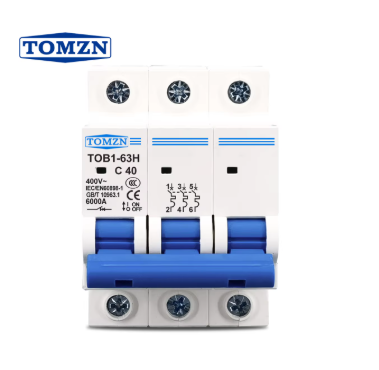
The global shift toward renewable energy has introduced a new set of electrical protection challenges that traditional circuit breakers simply were not designed to address. Solar photovoltaic arrays, battery energy storage systems, and off-grid power installations all operate on direct current, which behaves fundamentally differently from alternating current when it comes to fault conditions, arc suppression, and circuit isolation. This is precisely why the dc mcb has emerged as a mission-critical component in modern renewable energy installations around the world.
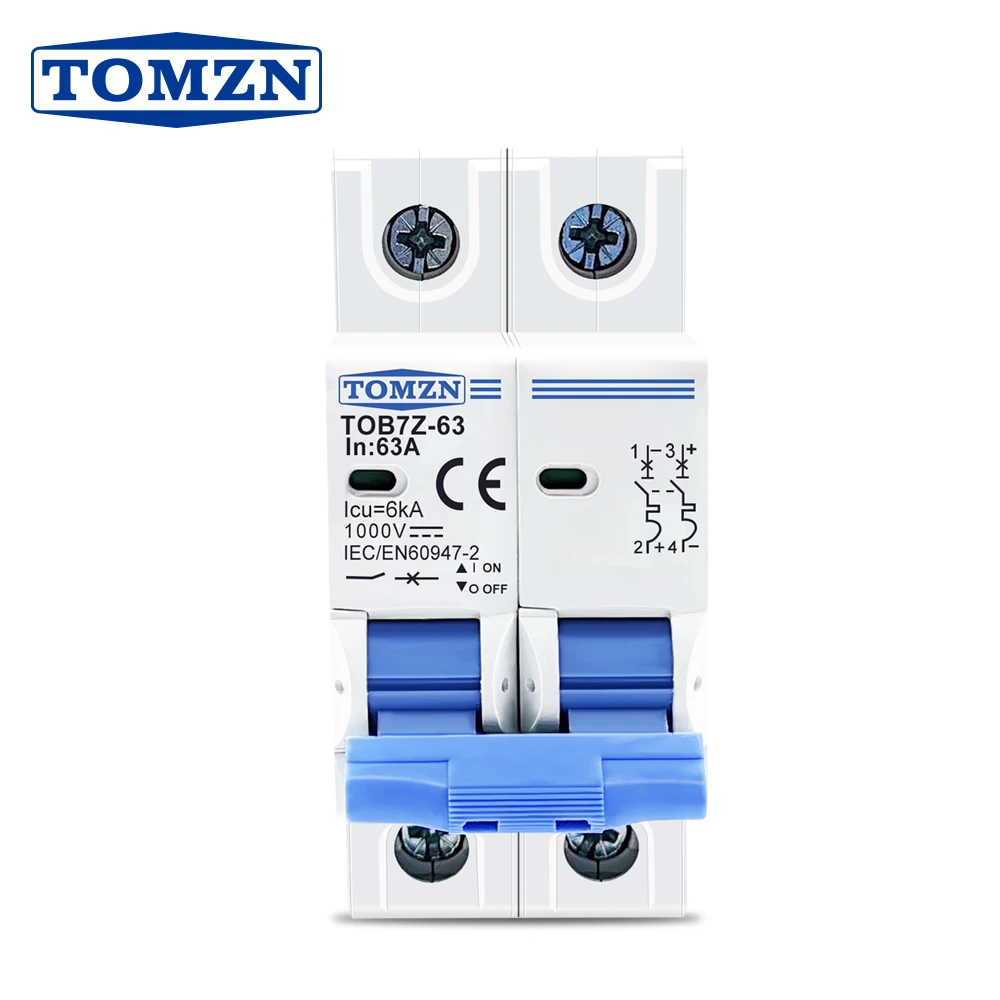
Understanding why the dc mcb matters requires looking at the electrical realities of photovoltaic systems and energy storage infrastructure. Unlike AC circuits, where voltage naturally crosses zero 50 to 60 times per second and helps extinguish arcs automatically, DC circuits maintain a continuous voltage level that makes arc extinction significantly more difficult. A properly rated and engineered dc mcb accounts for this physical reality and provides reliable, code-compliant protection in environments where failure is not an option.
The Electrical Challenges Unique to DC Systems
Why DC Arc Extinction Is Fundamentally Harder
When a fault or overload occurs in a DC circuit, the current does not pass through zero the way it does in AC systems. This means the arc that forms when contacts open in a circuit breaker will persist much longer and burn hotter unless the breaker is specifically designed to manage it. The dc mcb addresses this with elongated arc chambers, magnetic arc blowout mechanisms, and specially designed contact geometries that force the arc to stretch, cool, and extinguish rapidly.
Without these design features, a standard AC miniature circuit breaker used in a DC circuit would suffer catastrophic contact erosion or fail to interrupt the fault at all. This is a documented failure mode that has caused fires in improperly designed solar installations. The dc mcb eliminates this risk by being engineered from the ground up for DC fault conditions, not adapted from an AC solution.
The arc management inside a quality dc mcb also involves the use of high-resistance arc-quenching materials in the arc chamber walls. When the arc is stretched across these surfaces, energy is absorbed and the arc is extinguished more reliably. This engineering detail is why a dc mcb rated for 1000V DC cannot simply be replaced by an AC breaker of the same voltage rating.
High Voltage DC Environments in Solar PV Systems
Modern utility-scale and commercial rooftop solar systems routinely operate at string voltages exceeding 600V DC, with many systems now designed for 1000V DC or even 1500V DC strings to improve efficiency and reduce wiring costs. At these voltages, the consequences of inadequate protection are severe, and the dc mcb must be rated to interrupt faults at the full system operating voltage.
A dc mcb rated for 1000V DC is specifically validated to interrupt fault currents at that voltage without welding contacts, sustaining arcs, or failing to open the circuit. This rating is not interchangeable with an AC voltage rating of the same number. Engineers specifying protection for PV string combiners, inverter DC inputs, and battery bus bars must select a dc mcb with the correct DC voltage rating to ensure compliance with IEC 60898-2 or equivalent standards.
As solar panel efficiency improves and string lengths increase, the demand for high-voltage dc mcb solutions will continue to grow. Specifying the correct device today also means selecting one that can serve the system reliably over a 25-year operational lifespan, matching the design life of the solar panels themselves.
Key Roles the DC MCB Plays in Renewable Energy Protection
Overcurrent and Short-Circuit Protection
The primary role of any dc mcb is to protect wiring and equipment from overcurrent conditions, including sustained overloads and instantaneous short circuits. In a photovoltaic system, a short circuit can be caused by insulation breakdown, rodent damage to wiring, connector failures, or ground faults in wet conditions. The dc mcb responds to these faults within milliseconds, disconnecting the affected circuit before thermal damage can occur.
The tripping curves of a dc mcb, commonly designated as B, C, or D curves, define the relationship between overcurrent magnitude and tripping time. In solar applications, where the available fault current from multiple PV strings can be substantial, selecting the correct tripping curve ensures that the dc mcb trips quickly enough to protect equipment without nuisance tripping during normal startup or transient conditions.
Battery energy storage systems present a similar challenge. During charge and discharge cycles, current levels can be high, and a fault on the DC bus can release enormous energy very rapidly. The dc mcb in a battery system must be rated for the maximum possible fault current, which is determined by the battery bank's internal impedance, not just the normal operating current.
Manual Isolation and Safe Maintenance
Beyond automatic fault protection, the dc mcb serves a critical role as a means of safe manual isolation for maintenance work. Electricians and solar technicians working on inverters, string combiners, or battery banks need to be able to de-energize circuits safely before opening enclosures or handling live components. The dc mcb provides a lockable, visible isolation point that satisfies safety requirements in commercial and industrial renewable energy installations.
Unlike fuses, which require replacement after every operation, the dc mcb can be manually reset after tripping and reused indefinitely within its rated lifecycle. This makes it far more practical for installations where rapid commissioning or maintenance response is important. The ability to manually open and close the dc mcb also makes it valuable during system commissioning, when sections of a large installation need to be energized and de-energized in sequence.
Modern dc mcb designs also include auxiliary contact options and remote tripping accessories that allow integration with monitoring systems and safety shutdown circuits. This capability is particularly important in large-scale solar farms and battery storage facilities where automated protection responses are required.
Compliance, Standards, and Why They Matter
International Standards Governing DC MCB Performance
The importance of using a properly certified dc mcb cannot be overstated from a compliance perspective. IEC 60898-2 is the primary international standard governing the performance of circuit breakers for DC household and similar installations, while IEC 60947-2 governs industrial-grade DC circuit breakers. These standards define breaking capacity, tripping accuracy, endurance under operational cycling, and dielectric strength requirements specific to DC applications.
A dc mcb that carries third-party certification to these standards has been independently tested to confirm that its performance claims are accurate and reproducible. This matters because renewable energy installations are subject to grid connection requirements, insurance conditions, and building codes that typically mandate the use of certified electrical protection devices. Using an uncertified dc mcb in a commercial installation creates liability exposure and may invalidate insurance coverage.
Certifications such as TUV, CE, and CB scheme marks on a dc mcb confirm that the product has been evaluated by a recognized testing laboratory. Specifiers and installers should verify that the certification on the product matches the intended application voltage and current range, since a dc mcb certified for 500V DC is not automatically suitable for a 1000V DC system even if the current rating matches.
NEC and Local Code Requirements for PV System Protection
In North American markets, the National Electrical Code Article 690 specifically addresses solar photovoltaic system protection requirements. The code mandates overcurrent protection at string level, array level, and inverter input level, and specifies that all protection devices must be rated for DC operation at the maximum circuit voltage. The dc mcb is one of the accepted means of satisfying these requirements when properly rated and installed.
Local jurisdictions may also impose additional requirements beyond the NEC minimum, particularly for battery energy storage systems governed by NFPA 855. Engineers and electrical contractors working in these markets need to select a dc mcb that meets the most stringent applicable standard for the project, not simply the minimum threshold. Compliance documentation from the manufacturer should be readily available and traceable.
Selecting the Right DC MCB for Solar and Storage Applications
Voltage Rating, Current Rating, and Breaking Capacity
Selecting the correct dc mcb starts with a clear understanding of three parameters: operating voltage, continuous current rating, and breaking capacity. The voltage rating of the dc mcb must match or exceed the maximum open-circuit voltage of the PV string under worst-case low-temperature conditions, which is calculated using the temperature coefficient of the panels and the lowest expected ambient temperature at the installation site.
The continuous current rating of the dc mcb should match the maximum circuit current, which for a PV string is typically the short-circuit current of the string multiplied by a safety factor as required by the applicable code. Undersizing the current rating will cause nuisance tripping, while oversizing it will result in the dc mcb not providing effective overcurrent protection for the wiring.
Breaking capacity is the maximum fault current the dc mcb can safely interrupt without damage. In systems where multiple strings are paralleled in a combiner box, the available fault current at the combiner output can be much higher than the current from a single string. The dc mcb protecting the combiner output must have a breaking capacity adequate for the full parallel fault current available at that point in the circuit.
Polarity Configuration and Physical Installation Requirements
DC circuits are polarized, meaning current flows in one direction only, and the dc mcb must be connected in the correct polarity to function as designed. Many dc mcb devices are designed for single-pole or two-pole connection, with the two-pole configuration offering the advantage of breaking both the positive and negative conductors simultaneously. This provides complete galvanic isolation of the protected circuit and is required by some codes and standards for PV applications.
Physical installation requirements for the dc mcb include correct DIN rail mounting, adequate ventilation for heat dissipation, and wiring termination that meets the manufacturer's torque specifications. Poorly terminated connections on a dc mcb create resistance heating that can trigger false tripping or, in worst cases, cause insulation damage. Following the manufacturer's installation instructions precisely is a critical element of ensuring reliable long-term performance.
The environmental rating of the dc mcb enclosure or the enclosure in which it is installed must also be appropriate for the installation environment. Outdoor combiner boxes and rooftop electrical enclosures require IP65 or higher protection against dust and moisture ingress. The dc mcb itself typically operates inside a protective enclosure, but the terminals and wiring penetrations must also be properly sealed.
The Long-Term Value of DC MCB Integration in Renewable Systems
System Reliability and Reduced Downtime
Integrating a properly specified dc mcb at every required protection point in a solar or storage system directly improves system availability and reduces unplanned downtime. When a fault occurs, the dc mcb isolates only the affected circuit, allowing the rest of the system to continue operating. Without proper dc mcb protection, a fault could propagate through the system and cause broader damage requiring more extensive and costly repairs.
The resettable nature of the dc mcb also means that in cases where a transient condition caused a tripping event, the system can be returned to service quickly without waiting for replacement fuses or performing extensive diagnostic work. For solar installations where every hour of downtime represents lost generation revenue, this operational advantage has direct financial value.
Supporting the Energy Transition with Safe, Scalable Protection
As renewable energy capacity continues to expand globally, the demand for reliable dc mcb solutions will scale proportionally. Every new solar array, every battery storage installation, and every EV charging infrastructure project creates additional points where DC overcurrent protection is required. The dc mcb is not a peripheral accessory but a foundational component of the electrical safety architecture that makes large-scale clean energy deployment possible.
System designers who understand the importance of the dc mcb from the earliest stages of project planning will make better decisions about protection coordination, equipment selection, and code compliance. Treating the dc mcb as a strategic component rather than a commodity item leads to safer, more reliable, and longer-lived renewable energy installations that deliver on their investment promise over decades of operation.
FAQ
What is the difference between a DC MCB and a regular AC circuit breaker?
A dc mcb is specifically engineered to interrupt direct current circuits, where voltage does not naturally cross zero as it does in alternating current systems. AC circuit breakers rely on the zero-crossing of voltage to extinguish arcs, but a dc mcb uses elongated arc chambers, magnetic blowout coils, and specialized contact materials to force arc extinction in DC conditions. Using an AC breaker in a DC circuit is unsafe and non-compliant with applicable standards.
Why does a DC MCB need to be rated for the full string voltage of a solar system?
During a fault condition, the dc mcb must interrupt the full operating voltage of the circuit. In a PV string, this is the maximum open-circuit voltage of all series-connected panels, which can reach 600V, 1000V, or higher. A dc mcb rated below this voltage may fail to extinguish the arc during interruption, leading to device damage, fire risk, or sustained fault conditions. Always select a dc mcb with a voltage rating equal to or greater than the maximum circuit voltage.
Can a DC MCB be used in battery energy storage systems as well as solar PV?
Yes, a dc mcb is equally applicable in battery energy storage systems, EV charging infrastructure, and any other DC power application. The selection criteria remain the same: the dc mcb must be rated for the maximum DC voltage of the battery bank, the maximum continuous current, and the maximum fault current available from the batteries. Battery systems can deliver very high fault currents due to low internal impedance, so the breaking capacity of the dc mcb must be verified carefully.
How often does a DC MCB need to be inspected or replaced in a solar installation?
A quality dc mcb is designed for a specific number of operational cycles and a defined service life under normal conditions. Most manufacturers specify periodic inspection intervals, typically annually as part of a preventive maintenance program. The dc mcb should be inspected for signs of overheating, contact discoloration, or mechanical wear. If the dc mcb has operated under fault conditions, it should be inspected more thoroughly and replaced if any damage is evident, since fault interruption can cause contact erosion that reduces future performance.
Table of Contents
- The Electrical Challenges Unique to DC Systems
- Key Roles the DC MCB Plays in Renewable Energy Protection
- Compliance, Standards, and Why They Matter
- Selecting the Right DC MCB for Solar and Storage Applications
- The Long-Term Value of DC MCB Integration in Renewable Systems
-
FAQ
- What is the difference between a DC MCB and a regular AC circuit breaker?
- Why does a DC MCB need to be rated for the full string voltage of a solar system?
- Can a DC MCB be used in battery energy storage systems as well as solar PV?
- How often does a DC MCB need to be inspected or replaced in a solar installation?