
 EN
EN
In modern industrial and commercial facilities, understanding how energy flows through a building or production system is no longer a luxury — it is a fundamental requirement for cost control, sustainability, and operational efficiency. A wifi energy meter delivers exactly this kind of granular, real-time intelligence by continuously monitoring electrical parameters and transmitting that data wirelessly to cloud platforms or local dashboards. Unlike traditional analog meters that simply record cumulative consumption, a wifi energy meter transforms raw electrical readings into actionable operational insights. These insights help facility managers, engineers, and business owners make faster and better-informed decisions about their energy infrastructure.
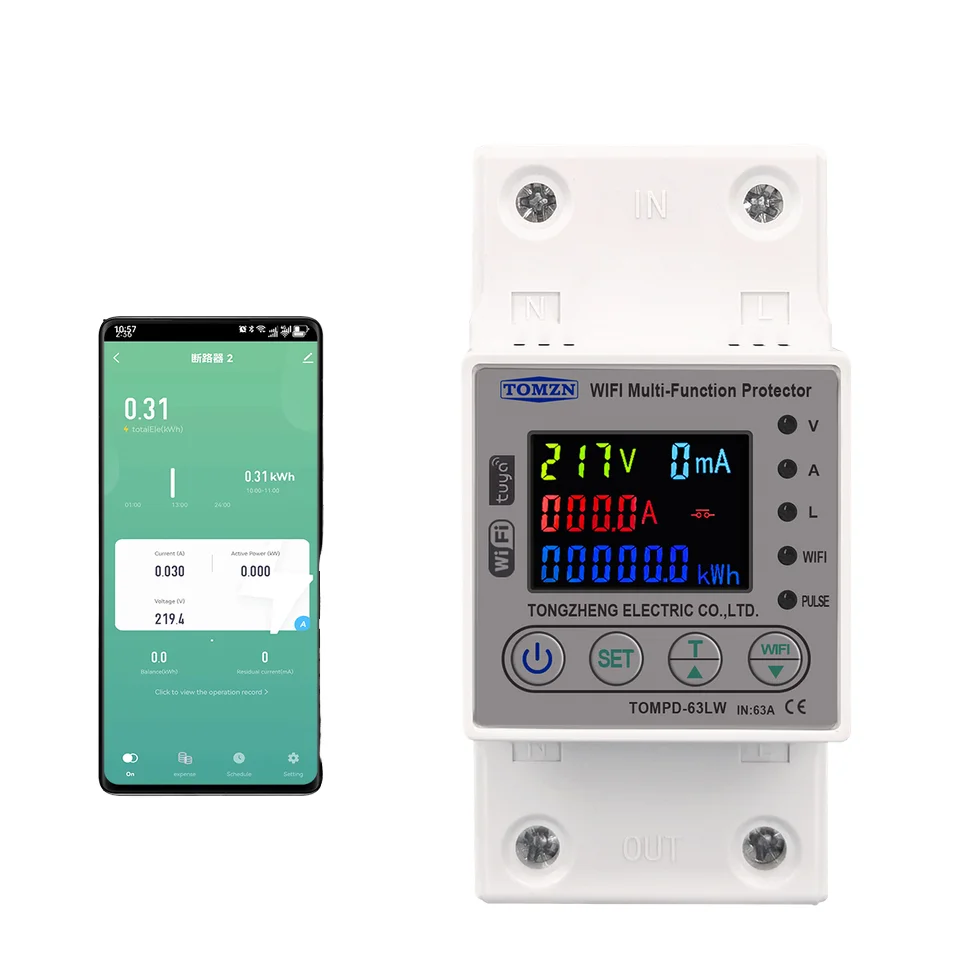
The question is not simply whether a wifi energy meter can measure electricity — it clearly can. The more important question is what those measurements actually reveal about the way a facility operates. From detecting hidden inefficiencies to enabling predictive maintenance, the data captured by a wifi energy meter goes far beyond simple kilowatt-hour totals. This article explores the specific operational insights that wifi energy meter data can provide, helping organizations understand why deploying this technology is a strategic decision rather than just an equipment upgrade.
Real-Time Load Visibility Across Circuits and Equipment
Understanding Instantaneous Power Demand
One of the most immediate operational insights a wifi energy meter provides is a live picture of power demand at any given moment. By monitoring current, voltage, and active power in real time, operators can see exactly how much electricity each circuit or piece of equipment is consuming right now — not just at the end of the billing cycle. This real-time visibility is critical for facilities where load conditions change frequently, such as manufacturing floors, data centers, and commercial kitchens.
When a wifi energy meter is installed at the circuit level, it becomes possible to compare the demand profiles of different machines or departments simultaneously. Operators can identify which assets are drawing the most power during peak hours and determine whether that consumption is justified by the work being performed. This kind of load-level transparency was previously only achievable through expensive power quality analyzers or manual sub-metering campaigns.
Real-time load data also enables immediate responses to anomalies. If a motor suddenly draws three times its normal current, a wifi energy meter connected to a smart alerting system can notify the maintenance team within seconds rather than hours. This speed of detection translates directly into reduced downtime and lower repair costs.
Mapping Load Distribution Across Operational Zones
A single facility often contains dozens of circuits serving different operational zones — offices, production lines, HVAC systems, lighting rigs, and server rooms. A wifi energy meter deployed across these zones creates a comprehensive load map that shows how electrical demand is distributed throughout the building. This map is invaluable for identifying zones that are consistently overloaded or, conversely, zones where electrical infrastructure is significantly oversized.
Load distribution data also supports capacity planning. When a facility manager is considering adding new equipment or expanding a production line, the historical load profiles from a wifi energy meter provide a factual basis for determining whether existing circuits can support the additional demand. This prevents costly surprises during commissioning and reduces the risk of tripping breakers or damaging equipment through overload.
Furthermore, understanding load distribution helps facilities optimize their tariff structures. Many utilities apply demand charges based on peak consumption within a billing period. By identifying which zones contribute most to peak demand, energy managers can implement load-shifting strategies that meaningfully reduce electricity bills without disrupting operations.
Consumption Pattern Analysis and Energy Waste Detection
Identifying Baseline Energy Consumption
Every facility has a baseline energy consumption — the minimum amount of electricity drawn even when the building is theoretically unoccupied or at rest. A wifi energy meter makes it straightforward to calculate this baseline by logging consumption data continuously, including nights, weekends, and holidays. If the baseline is higher than expected, it signals that equipment is running unnecessarily, standby loads are excessive, or there is an unauthorized use of electricity.
Establishing an accurate baseline is the first step toward meaningful energy reduction. Once managers know what the facility should be consuming during off-hours, they can set automated alerts through the wifi energy meter platform to flag deviations. This creates an early warning system for energy waste that operates continuously without requiring manual data reviews.
In facilities with multiple shifts or seasonal operations, the wifi energy meter data reveals how consumption patterns change across different operating conditions. These comparisons allow energy teams to isolate the specific activities or behaviors that drive consumption spikes, making targeted interventions far more effective than broad-based efficiency campaigns.
Detecting Ghost Loads and Inefficient Equipment
Ghost loads — the electricity consumed by equipment left in standby mode or by devices that are never fully switched off — are a common source of energy waste in commercial and industrial settings. A wifi energy meter with sufficient resolution can detect these phantom draws because it records consumption at regular intervals, making it possible to see small but persistent loads that add up significantly over a year.
Inefficient equipment is another target that wifi energy meter data can expose. When an aging motor, compressor, or transformer begins to deteriorate, its energy consumption often rises before any mechanical failure becomes apparent. By tracking the consumption trend of individual assets over time, operators can identify equipment that is consuming more electricity than its rated specifications suggest, prompting inspection or replacement before the unit fails entirely.
The operational insight here extends beyond simple savings calculations. Detecting inefficiency early allows maintenance teams to plan repairs during scheduled downtime rather than responding to emergency breakdowns. This proactive approach reduces production losses and maintenance costs simultaneously, delivering a compounded return on the investment in wifi energy meter technology.
Voltage, Current, and Power Quality Insights
Monitoring Voltage Stability and Fluctuations
A wifi energy meter that measures voltage in real time provides a continuous record of supply quality at every monitored circuit. Voltage fluctuations — whether sags, swells, or sustained deviations from nominal values — can damage sensitive equipment, reduce motor efficiency, and cause premature component failure. By logging these events, the wifi energy meter creates a historical record that helps facility engineers diagnose the root causes of recurring equipment problems.
Voltage data also reveals whether a facility's internal wiring is adequately sized for its load. Excessive voltage drops along distribution cables indicate undersized conductors or loose connections, both of which represent safety risks and efficiency losses. A wifi energy meter deployed at both the source and load ends of a circuit can quantify this voltage drop precisely, providing the data needed to justify rewiring or connection repairs.
For facilities connected to a utility grid with known stability issues, wifi energy meter voltage logs can support conversations with the utility provider. When a facility can demonstrate a documented pattern of supply voltage violations, it has a factual basis for requesting infrastructure improvements or compensation for equipment damage caused by poor power quality.
Current Imbalance and Leakage Detection
In three-phase electrical systems, balanced current distribution across phases is essential for efficient motor operation and transformer performance. A wifi energy meter capable of measuring per-phase current can identify imbalances that reduce efficiency and cause excess heating in motors and cables. Even a modest current imbalance can significantly reduce motor lifespan and increase energy consumption, making this one of the more financially significant insights the wifi energy meter can deliver.
Leakage current is another parameter that advanced wifi energy meter models can monitor. Electrical leakage — the flow of current through unintended paths, often through insulation defects or grounding faults — represents both a safety hazard and an energy waste. Real-time leakage monitoring allows facilities to detect developing insulation failures before they escalate into arc faults or ground faults that could cause fires or serious injuries.
The combination of current monitoring, voltage tracking, and leakage detection transforms a wifi energy meter from a simple consumption recorder into a comprehensive electrical health monitor. This multi-parameter visibility is particularly valuable in environments where electrical safety standards are strict or where the cost of equipment downtime is high.
Operational Scheduling and Demand Management Insights
Aligning Equipment Schedules with Tariff Windows
Energy tariffs in many regions are time-differentiated, meaning that electricity costs more during peak demand periods and less during off-peak hours. A wifi energy meter with time-stamped data logging makes it straightforward to analyze exactly how much of a facility's consumption falls into each tariff window. This analysis is the foundation for effective demand management strategies that reduce electricity costs without reducing operational output.
When wifi energy meter data is integrated with building management or production scheduling systems, it becomes possible to automate load shifting. High-energy tasks such as batch processing, compressed air generation, or refrigeration pre-cooling can be scheduled for off-peak periods based on real consumption data rather than guesswork. Over time, the wifi energy meter continues to verify whether these scheduling changes are delivering the expected savings or whether further adjustments are needed.
This insight also benefits facilities that participate in demand response programs offered by utilities. By demonstrating through wifi energy meter records that they can reliably reduce demand on request, facilities can qualify for financial incentives that further offset their energy costs. The meter essentially serves as both the measurement tool and the compliance verification instrument for these programs.
Identifying Operational Inefficiencies Through Time-Series Analysis
Time-series data from a wifi energy meter reveals patterns that are invisible in aggregate consumption figures. For example, a brief but sharp current spike every time a particular machine starts indicates a high inrush current that stresses the electrical distribution system. A gradual upward trend in a circuit's consumption over several weeks suggests increasing mechanical resistance in a driven load, such as a conveyor belt or pump, that warrants investigation.
Shift-by-shift comparisons drawn from wifi energy meter data can highlight differences in how operators run the same equipment. If one shift consistently consumes 15% more electricity than another while producing similar output, the data prompts an investigation into operating practices, settings, or training gaps. This kind of granular operational insight is only possible because the wifi energy meter records consumption continuously rather than at monthly intervals.
For facilities pursuing ISO 50001 energy management certification or internal sustainability targets, the continuous time-series data from a wifi energy meter provides the documented evidence of measurement, monitoring, and improvement that these frameworks require. The meter effectively becomes the backbone of a defensible energy management system.
Maintenance Planning and Asset Health Insights
Using Consumption Trends as a Predictive Maintenance Signal
One of the less obvious but highly valuable operational insights that wifi energy meter data provides is its ability to serve as an early indicator of equipment degradation. Most mechanical and electrical faults are preceded by changes in energy consumption before they produce visible symptoms. A bearing that is beginning to fail increases friction, which increases the motor's power draw. A clogged filter forces a fan or pump to work harder, consuming more electricity.
By establishing consumption benchmarks for each monitored asset using wifi energy meter historical data, maintenance teams can set threshold alerts that trigger inspection before failure occurs. This approach — sometimes called energy-based predictive maintenance — is particularly effective for assets that run continuously, where traditional time-based maintenance intervals may either over-maintain or under-maintain based on actual equipment condition.
The wifi energy meter thus becomes an integral part of a facility's asset management strategy, providing a low-cost, non-intrusive method of tracking equipment health across an entire electrical distribution system simultaneously. This breadth of coverage is difficult and expensive to achieve through alternative sensor technologies.
Supporting Capital Replacement Decisions with Data
When a facility is evaluating whether to repair or replace aging equipment, the consumption history recorded by a wifi energy meter provides objective financial evidence to support that decision. If records show that a machine's energy consumption has increased steadily over several years and now significantly exceeds its original rated consumption, that data makes the business case for replacement concrete rather than speculative.
Post-replacement, the wifi energy meter immediately begins recording the new equipment's consumption, allowing teams to verify that the expected efficiency gains are actually materializing. This verification closes the loop on capital investment decisions and builds institutional knowledge about the real-world performance of different equipment choices.
Over time, a facility that has accumulated years of wifi energy meter data develops a rich operational intelligence asset — a detailed record of how its electrical systems have performed, degraded, and improved under different conditions. This record is valuable not only for internal management but also for audits, insurance assessments, and compliance reporting.
FAQ
How does a wifi energy meter differ from a standard energy meter in terms of the data it provides?
A standard energy meter typically records only cumulative kilowatt-hour consumption and provides no real-time visibility or remote access. A wifi energy meter continuously measures multiple electrical parameters — including voltage, current, active power, power factor, and sometimes leakage current — and transmits this data wirelessly to a cloud platform or local dashboard. This enables real-time monitoring, historical trend analysis, automated alerts, and integration with energy management software, delivering far richer operational insights than a conventional meter can provide.
Can a wifi energy meter help reduce electricity bills directly?
Yes, indirectly but meaningfully. A wifi energy meter provides the data needed to identify waste, optimize equipment scheduling, reduce peak demand charges, and detect inefficient assets. While the meter itself does not consume or save electricity, the operational insights it delivers enable targeted actions that consistently produce measurable reductions in energy consumption and cost. Facilities that actively use wifi energy meter data as part of an energy management program typically achieve significant savings compared to those operating without this level of visibility.
What types of facilities benefit most from deploying a wifi energy meter?
Any facility with significant or complex electrical consumption can benefit, but the return is typically greatest in manufacturing plants, commercial buildings, data centers, retail chains, and multi-tenant properties. These environments have multiple circuits, variable loads, and high stakes for both energy cost control and equipment reliability. A wifi energy meter deployed in these settings generates continuous data streams that support operational improvements across maintenance, scheduling, compliance, and capital planning functions.
How many wifi energy meters are typically needed to gain meaningful operational insights?
The optimal number depends on the complexity of the facility and the granularity of insight required. At a minimum, installing a wifi energy meter at the main distribution panel provides facility-level consumption data. Greater value is achieved by deploying meters at the sub-panel or circuit level, allowing teams to isolate consumption by zone, department, or individual piece of equipment. Most energy management projects start with high-priority circuits and expand the wifi energy meter network as value is demonstrated and operational questions become more specific.
Table of Contents
- Real-Time Load Visibility Across Circuits and Equipment
- Consumption Pattern Analysis and Energy Waste Detection
- Voltage, Current, and Power Quality Insights
- Operational Scheduling and Demand Management Insights
- Maintenance Planning and Asset Health Insights
-
FAQ
- How does a wifi energy meter differ from a standard energy meter in terms of the data it provides?
- Can a wifi energy meter help reduce electricity bills directly?
- What types of facilities benefit most from deploying a wifi energy meter?
- How many wifi energy meters are typically needed to gain meaningful operational insights?