
 EN
EN
When electrical systems face sudden voltage surges, the margin between safe operation and catastrophic equipment failure can be measured in microseconds. An ac spd — or AC surge protective device — is the frontline defense against these transient overvoltage events. Yet not all surge protection performs equally, and one of the most critical but frequently overlooked performance parameters is response speed. Understanding why response speed matters is essential for any engineer, facility manager, or procurement specialist responsible for protecting sensitive industrial or commercial equipment.
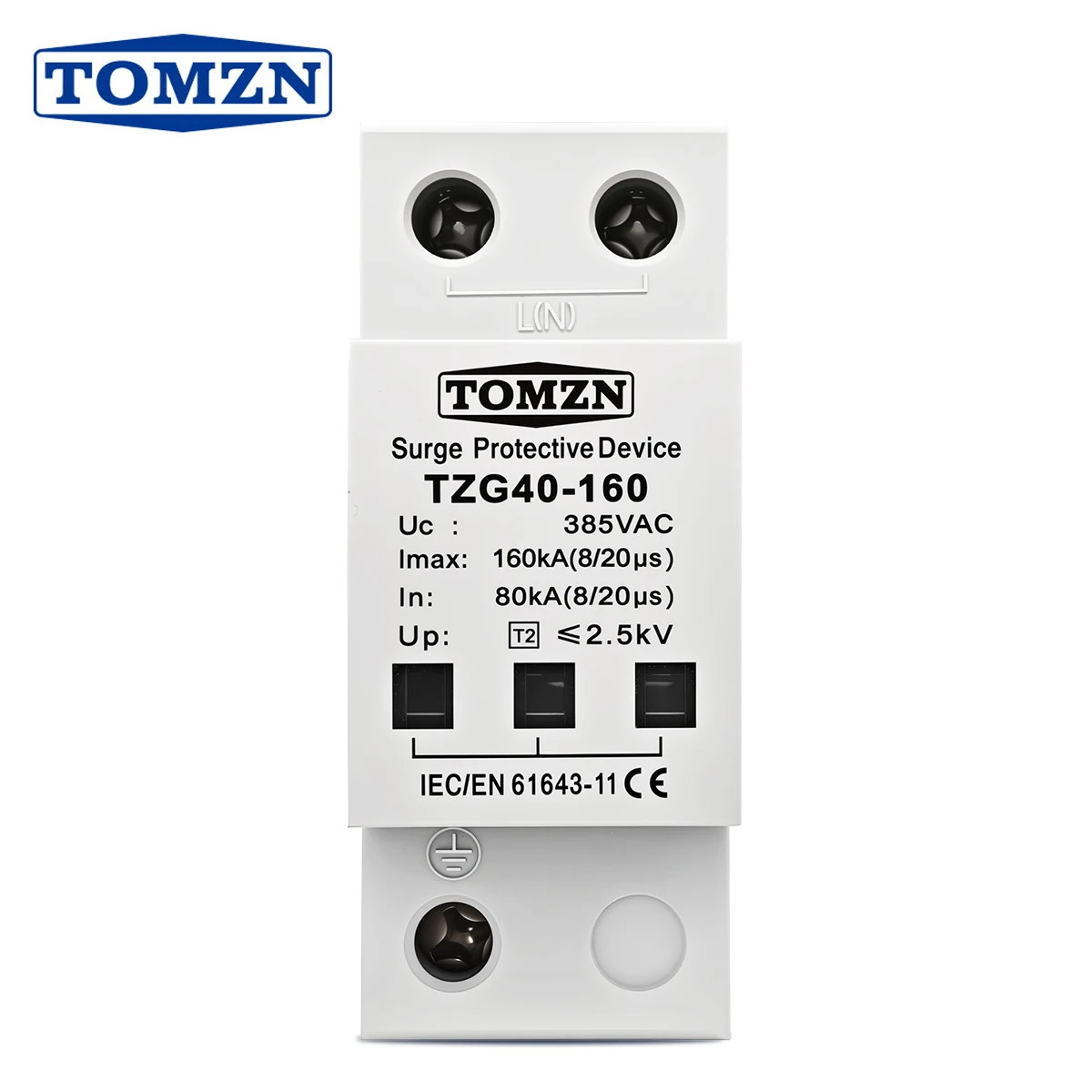
The role of an ac spd is not simply to exist in a circuit — it is to react fast enough to intercept a surge before that surge reaches and damages downstream equipment. A device that responds even a few nanoseconds too slowly may allow a destructive voltage spike to pass through, rendering the protection effectively useless. This article examines the mechanics of response speed in ac spd technology, why it directly determines protection effectiveness, and what it means for real-world equipment safety decisions.
The Physics Behind Surge Events and Why Timing Is Everything
How Voltage Surges Develop in AC Systems
Voltage surges in AC electrical systems arise from multiple sources: lightning strikes on or near power lines, switching operations within the grid, motor start-stop cycles, and capacitor bank switching. These events generate transient overvoltages that can rise from normal operating voltage to several thousand volts in an extremely short time window — often within one to ten microseconds. The waveform of a typical surge is steep, aggressive, and brief.
The energy carried in these transients is concentrated in that brief window. If an ac spd does not begin clamping the voltage within that same window, the surge energy propagates further into the circuit. By the time a slow-responding device activates, the leading edge of the surge — which often carries the highest instantaneous voltage — has already passed through to connected equipment.
This is why the response speed of an ac spd is not a secondary specification. It is the primary determinant of whether the device actually intercepts the most damaging portion of a transient event. A device rated for high discharge current but with slow response speed may handle the bulk energy of a surge while still allowing the initial voltage spike to damage sensitive electronics.
The Relationship Between Rise Time and Equipment Vulnerability
Modern industrial and commercial equipment — including variable frequency drives, programmable logic controllers, power supplies, and communication interfaces — contains semiconductor components that are highly sensitive to overvoltage. These components have defined withstand voltage thresholds, and exceeding those thresholds even momentarily can cause immediate failure or latent damage that shortens service life.
The rise time of a surge waveform describes how quickly the voltage climbs from its initial value to its peak. Faster rise times mean the voltage reaches its destructive peak sooner, leaving less time for a protective device to respond. When an ac spd has a response speed that is slower than the surge rise time, the device is essentially reacting after the damage has already been done.
Engineers designing protection schemes must therefore match the response speed of the selected ac spd to the expected surge characteristics of the installation environment. High-risk environments — such as facilities near lightning-prone areas, industrial sites with heavy switching loads, or locations fed by overhead power lines — demand ac spd solutions with the fastest available response characteristics.
How AC SPD Response Speed Is Measured and Classified
Nanosecond-Level Response in Modern Surge Protection
The response speed of an ac spd is typically expressed in nanoseconds (ns) and refers to the time elapsed between the arrival of a surge at the device's terminals and the moment the device begins conducting and clamping the overvoltage. High-quality ac spd products achieve response times in the range of 25 nanoseconds or less, with some advanced designs operating in the sub-nanosecond range depending on the technology used.
Metal oxide varistors (MOVs), which are the most common active element in ac spd devices, respond in the range of 25 to 50 nanoseconds. Gas discharge tubes (GDTs) are generally slower, with response times in the microsecond range, making them more suitable as a first-stage coarse protection element rather than a fine-clamping device. Transient voltage suppression (TVS) diodes offer the fastest response — often under one nanosecond — but have lower energy handling capacity.
Understanding these technology differences helps explain why many professional-grade ac spd designs use a hybrid or multi-stage architecture. By combining a GDT for bulk energy absorption with an MOV or TVS diode for fast voltage clamping, the device achieves both high discharge capacity and rapid response speed — addressing both the energy and timing dimensions of surge protection simultaneously.
IEC and UL Standards for AC SPD Performance Classification
International standards such as IEC 61643-11 and UL 1449 define performance classifications for ac spd devices, including Type 1, Type 2, and Type 3 designations. These classifications reflect the device's intended installation location and its ability to handle different surge magnitudes and waveforms. While these standards do not always specify response speed as a standalone metric, the test waveforms used — such as the 8/20 µs current waveform and the 1.2/50 µs voltage waveform — implicitly test the device's ability to respond within defined time windows.
A Type 2 ac spd, for example, is tested with waveforms that simulate the surges most commonly encountered at the distribution board level. The device must clamp the voltage to an acceptable protection level (Up) within the constraints of the test waveform. Devices that achieve lower Up values under these test conditions are demonstrating faster and more effective voltage clamping — which is a direct expression of response speed performance.
When evaluating ac spd specifications, procurement teams should look beyond the nominal discharge current (In) and maximum discharge current (Imax) ratings. The voltage protection level (Up) is a more direct indicator of how quickly and effectively the device clamps a surge, and it should be compared against the impulse withstand voltage (Uimp) of the equipment being protected.
Practical Consequences of Slow AC SPD Response in Industrial Settings
Equipment Damage Scenarios Linked to Inadequate Response Speed
In industrial environments, the consequences of an ac spd with insufficient response speed are not theoretical — they manifest as real equipment failures with measurable financial impact. A programmable logic controller that experiences a voltage spike exceeding its withstand threshold may fail immediately, halting an entire production line. More insidiously, repeated exposure to surges that are partially but not fully clamped can cause cumulative degradation in semiconductor junctions, leading to unpredictable failures weeks or months after the initial surge events.
Variable frequency drives are particularly vulnerable because they contain large banks of capacitors and IGBT transistors that are sensitive to both overvoltage and rapid voltage transients. An ac spd that responds slowly enough to allow the initial spike of a surge to pass through may not cause immediate drive failure, but it accelerates the aging of internal components. Maintenance teams often attribute these failures to general wear rather than surge-related damage, masking the true root cause.
Communication and control systems connected to AC power — including SCADA terminals, HMI panels, and industrial networking equipment — are equally at risk. These systems often have lower impulse withstand voltages than power equipment, making fast ac spd response speed even more critical in control room and automation cabinet applications.
The Cost of Underestimating Response Speed in Protection Design
Selecting an ac spd based solely on price or discharge current rating without considering response speed is a common and costly mistake. A device with a high Imax rating but slow response may handle the energy of a large surge while still allowing the voltage spike to damage equipment. The financial cost of replacing a failed drive, controller, or power supply typically far exceeds the cost difference between a standard and a high-performance ac spd.
Beyond direct replacement costs, unplanned downtime in industrial facilities carries significant indirect costs — lost production, emergency labor, expedited parts procurement, and potential safety incidents. When an ac spd fails to protect equipment due to inadequate response speed, the downstream costs are rarely attributed to the protection device selection decision, making it easy to repeat the same mistake in future installations.
A rigorous protection design approach treats ac spd response speed as a non-negotiable specification, not an optional enhancement. This means reviewing the surge environment, identifying the most vulnerable equipment, and selecting ac spd devices whose response speed and voltage protection level are demonstrably matched to the protection requirements of the installation.
Selecting an AC SPD with the Right Response Speed for Your Application
Matching Response Speed to Installation Environment and Equipment Sensitivity
The first step in selecting an ac spd with appropriate response speed is characterizing the surge environment. Facilities located in areas with high lightning ground flash density require ac spd devices capable of handling high-energy surges with fast response, typically Type 1 or combined Type 1+2 devices at the service entrance. Downstream distribution boards and equipment panels benefit from Type 2 ac spd devices with low voltage protection levels and fast clamping characteristics.
Equipment sensitivity is the second key variable. The impulse withstand voltage (Uimp) of the most sensitive equipment in the circuit defines the maximum allowable protection level (Up) for the ac spd. If the most sensitive device in a panel has a Uimp of 1.5 kV, the ac spd protecting that panel must achieve a Up value below 1.5 kV under the relevant test waveform. Achieving a low Up value requires fast response speed — the two specifications are directly linked.
For applications involving high-current ac spd devices — such as those rated at 120 kA, 160 kA, or 200 kA — it is important to verify that the high discharge capacity does not come at the expense of response speed. Premium ac spd designs in this current class maintain fast response characteristics while delivering the energy handling capacity needed for high-exposure installations.
Multi-Stage Protection Strategies That Leverage Response Speed Advantages
A single ac spd, regardless of its response speed, may not provide complete protection in all scenarios. Multi-stage protection strategies use coordinated ac spd devices at different points in the electrical distribution system to address surges of different magnitudes and waveforms. The first stage, typically installed at the main distribution board, handles the bulk energy of large surges. Subsequent stages, installed closer to sensitive equipment, provide fine clamping with faster response speeds.
This cascaded approach ensures that even if the first-stage ac spd absorbs most of the surge energy, any residual voltage transient is intercepted by a fast-responding second or third-stage device before it reaches sensitive equipment. The coordination between stages — including the impedance between them — is critical to ensuring that each ac spd operates within its intended role without interfering with the others.
When designing multi-stage protection, the response speed of each ac spd in the chain must be considered in relation to the expected residual surge waveform at that point in the system. Faster response speeds at the final protection stage, closest to the equipment, provide the last line of defense against the steep-fronted transients that can still cause damage even after upstream energy absorption.
FAQ
What is the typical response speed of a quality ac spd?
A quality ac spd using metal oxide varistor technology typically achieves a response speed of 25 nanoseconds or less. Hybrid designs that combine MOV elements with transient voltage suppression diodes can achieve even faster response, sometimes under one nanosecond for the fine-clamping stage. The specific response speed should be confirmed in the device datasheet and matched to the surge rise time expected in the installation environment.
Does a higher discharge current rating mean faster response speed in an ac spd?
Not necessarily. Discharge current rating (Imax or In) and response speed are independent specifications. A high-current ac spd is designed to handle large surge energies without failing, but its response speed depends on the internal technology and circuit design. Always evaluate both the discharge current rating and the voltage protection level (Up) together — a low Up value under standard test waveforms is the best indicator of fast and effective response speed.
How does response speed affect the voltage protection level of an ac spd?
Response speed and voltage protection level are directly related. A faster-responding ac spd begins clamping the surge voltage sooner, which means the peak voltage that passes through to protected equipment is lower. This results in a lower Up value. Conversely, a slow-responding ac spd allows the surge voltage to rise higher before clamping begins, resulting in a higher Up value and greater risk of equipment damage. Selecting an ac spd with a low Up value is therefore equivalent to selecting one with fast response speed.
Can an ac spd with fast response speed protect against all types of surges?
Fast response speed is essential but not sufficient on its own. An ac spd must also have adequate discharge current capacity to absorb the energy of the surges it encounters without degrading or failing. In high-exposure environments, a single ac spd may need to be complemented by additional protection stages. A well-designed ac spd with both fast response speed and appropriate discharge capacity, installed at the correct location in the electrical system, provides reliable and comprehensive protection against the most common surge threats in industrial and commercial applications.