
 EN
EN
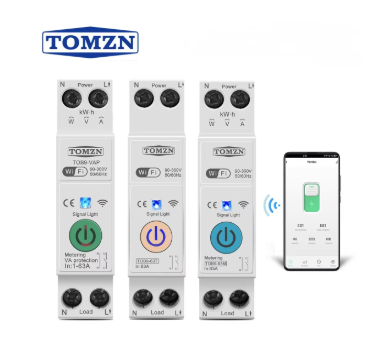
Electrical equipment is a significant investment in any industrial, commercial, or residential setting. Voltage fluctuations, power surges, and sudden supply interruptions are everyday realities that can silently degrade or catastrophically damage motors, appliances, and control systems. A reconnect protector plays a foundational role in defending that investment by monitoring supply conditions and allowing equipment to restart only when it is genuinely safe to do so. Without this layer of protection, the cost of equipment replacement and unplanned downtime can quickly outpace the modest expense of installing proper safeguards.
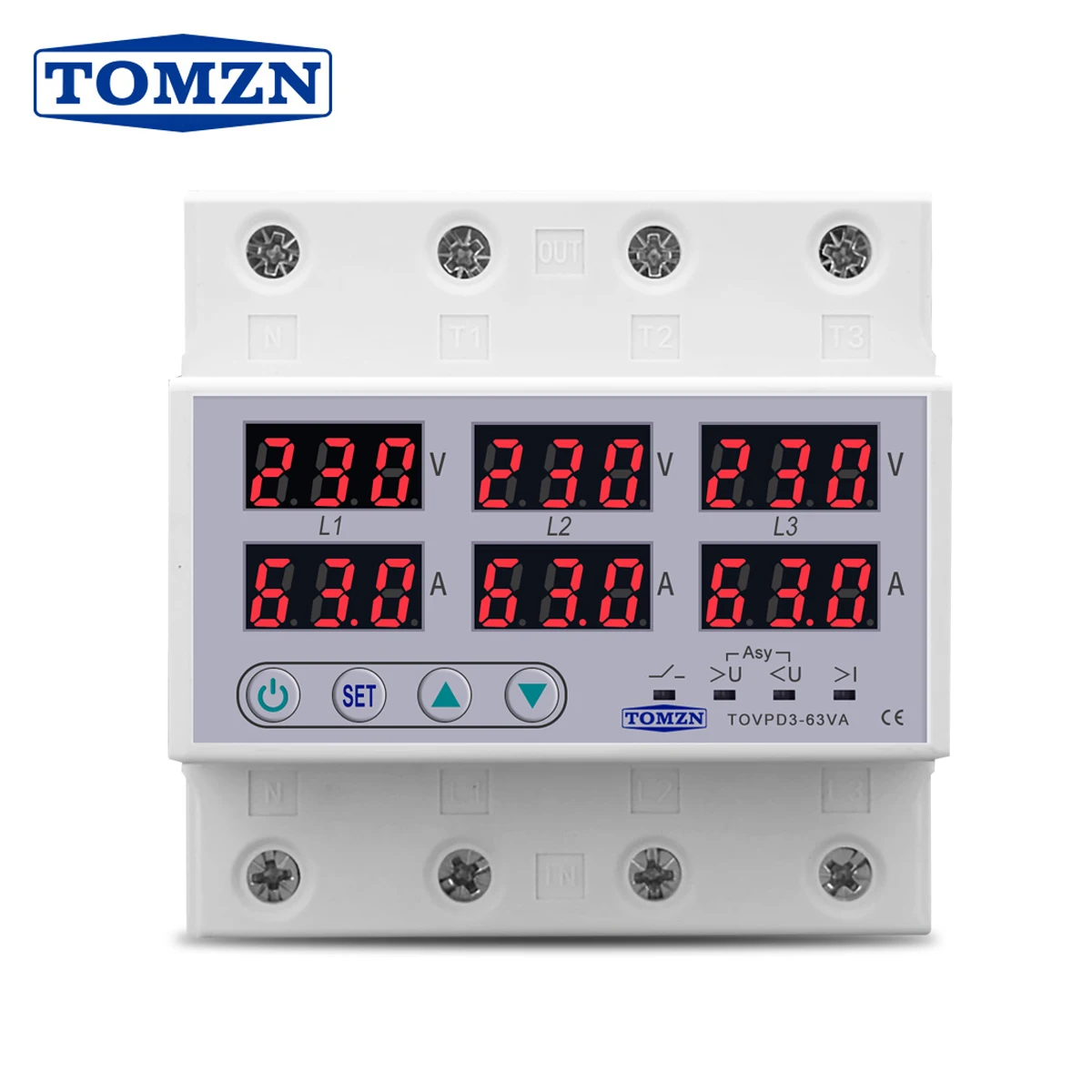
Understanding why a reconnect protector matters requires looking beyond simple circuit protection. Traditional fuses and breakers respond to faults that have already occurred. A reconnect protector, by contrast, is proactive — it evaluates voltage levels, detects abnormal conditions, and manages the reconnection sequence in a way that actively prevents damage rather than merely interrupting current after harm has begun. This article explores the core reasons these devices are indispensable to a well-designed electrical safety strategy.
The Core Function of a Reconnect Protector in Electrical Systems
Monitoring Voltage Conditions Before Reconnection
The defining characteristic of a reconnect protector is its ability to monitor incoming voltage before allowing equipment to re-energize. When power is restored after an outage or a fault, the returning supply may not immediately be stable. Voltage can momentarily spike well above normal operating range or return at a depressed level that cannot safely support motor loads. A reconnect protector holds the circuit open during this recovery window, effectively acting as a gatekeeper between the supply and the load.
This monitoring function is particularly important in three-phase systems, where phase imbalance or phase loss can occur even when overall voltage appears acceptable on a single measurement. Motors operating under these conditions experience elevated current draw and thermal stress that shortens winding life dramatically. The reconnect protector evaluates all three phases simultaneously, ensuring that reconnection is only permitted when all conditions meet preset thresholds.
Without this verification step, automatic reconnection could expose equipment to conditions nearly as damaging as the original fault. The protection sequence that a reconnect protector enforces is not a luxury feature — it is the difference between equipment that survives thousands of power cycles and equipment that fails prematurely after just a handful of unstable restarts.
Automatic Recovery and Its Role in Operational Continuity
One of the most valued features of a modern reconnect protector is automatic recovery. Once the supply voltage returns within the acceptable operating range and remains stable for the programmed delay period, the device reconnects the load without requiring manual intervention. This is enormously practical in remote pump stations, automated production lines, and refrigeration systems where constant human supervision is neither feasible nor economical.
Automatic recovery does not mean reckless reconnection. The time delay built into the reconnect protector is specifically engineered to allow the supply to stabilize, motor residual magnetism to decay, and mechanical loads to come to rest before restart energy is applied. This timed sequence protects against the mechanical shock of reconnecting into a motor that is still spinning and the electrical stress of reconnecting into a volatile supply.
For businesses managing critical processes, the automatic recovery feature of a reconnect protector reduces the response burden on maintenance teams and minimizes the window during which production is halted. When combined with over-voltage, under-voltage, and over-current detection, the device delivers a comprehensive safety response that would otherwise require multiple separate components and manual coordination.
Why Voltage Instability Demands Dedicated Protection
The Hidden Damage of Over-Voltage and Under-Voltage Events
Voltage deviations above and below nominal values are far more common than most facility managers realize. Grid instability, shared transformer loading, long cable runs, and sudden large-load disconnections all contribute to transient and sustained voltage abnormalities. Over-voltage accelerates insulation breakdown in motor windings, damages capacitors, and can cause electronic control boards to fail instantly. Under-voltage is equally destructive, forcing motors to draw excess current to maintain torque, generating heat that degrades winding insulation and shortens bearing life.
A reconnect protector with adjustable voltage thresholds allows operators to define the acceptable operating window for their specific equipment. When voltage drifts outside that window, the device disconnects the load and begins monitoring the supply. This response happens in seconds, well before thermal damage has time to accumulate. The adjustability of a quality reconnect protector is a critical feature because different loads have different tolerance profiles — a precision CNC machine requires tighter thresholds than a water pump, and the protection device should reflect those differences.
Over time, repeated exposure to voltage excursions without protection leads to insulation failure that is gradual and difficult to diagnose until a winding shorts to ground or a catastrophic motor burnout occurs. The reconnect protector eliminates this cumulative risk by ensuring that equipment simply does not operate under conditions that would cause that gradual degradation.
Over-Current Protection as a Complementary Safety Layer
Beyond voltage management, many reconnect protector designs incorporate over-current detection as a complementary protective function. Over-current conditions arise from mechanical overloads, phase faults, locked rotor scenarios, and gradual bearing deterioration. When current exceeds the rated threshold, the reconnect protector trips the load and prevents continued operation under those damaging conditions.
Integrating over-current protection within a single reconnect protector unit simplifies panel design, reduces wiring complexity, and ensures that all protective responses are coordinated through one device. This coordination matters because voltage and current anomalies often occur together. A phase loss event, for example, causes both a voltage imbalance and an over-current condition in the remaining phases. A device that monitors both simultaneously can respond more precisely than two independent devices operating without cross-awareness.
For equipment protection at the 63A rating level — a common specification for compressors, large pumps, and industrial conveyors — having a single reconnect protector that addresses voltage, phase, and current conditions reduces the chance of a protection gap. Each layer reinforces the others, creating a safety net that catches fault scenarios no single protection type could fully address alone.
Applications Where a Reconnect Protector Is Particularly Critical
Motor-Driven Equipment and HVAC Systems
Electric motors are among the most sensitive and expensive assets in any facility, and they are precisely where a reconnect protector delivers its greatest value. Motors depend on balanced, stable voltage for efficient and reliable operation. Reconnecting a motor immediately after a power disturbance without any verification of supply quality is a practice that leads to stator winding failure, bearing damage, and reduced service life. The reconnect protector enforces the recovery delay that prevents these outcomes.
HVAC compressors are especially vulnerable because they operate under high mechanical loads and use refrigerant-lubricated components that depend on normal operating cycles for lubrication distribution. A hard restart following an unstable power event can flood the compressor with liquid refrigerant or apply starting torque before lubrication is adequate. The reconnect protector addresses this by ensuring the restart only occurs under verified, stable conditions after an adequate time delay.
In agricultural settings, submersible pumps and irrigation equipment face frequent power quality challenges from overloaded rural distribution networks. A reconnect protector installed on these systems guards against the under-voltage and phase-loss conditions that are endemic to rural grid infrastructure, significantly extending equipment service intervals and reducing the frequency of costly emergency service calls.
Commercial Refrigeration and Cold-Chain Infrastructure
Cold storage facilities, supermarket refrigeration systems, and pharmaceutical cold-chain equipment operate continuously and have almost zero tolerance for equipment failure. Power interruptions are unavoidable, but the reconnection behavior after those interruptions is entirely controllable with a properly specified reconnect protector. When grid power returns after an outage, it may do so at a slightly elevated or depressed voltage as the local distribution network rebalances. A reconnect protector delays the restart of refrigeration compressors until that rebalancing is complete.
The cost implication of uncontrolled restarts in cold-chain infrastructure extends beyond equipment repair. A failed compressor in a commercial freezer can result in significant product spoilage losses that dwarf the cost of the protective device. For food safety compliance and pharmaceutical temperature management, the reconnect protector is not optional equipment — it is a core component of the system's reliability architecture.
Industrial process chillers used in plastics manufacturing, data center cooling, and laser cutting equipment share the same vulnerability. Any power event that causes an uncontrolled or premature restart can disrupt the process, cause equipment damage, and create quality defects in the finished product. A reconnect protector installed upstream of these systems provides the restart management that production quality demands.
Selecting and Configuring a Reconnect Protector Effectively
Key Parameters for Correct Device Selection
Choosing the right reconnect protector for a given application involves evaluating several key parameters. Current rating is the most fundamental — the device must be rated to handle the full-load current of the connected equipment with adequate headroom for starting surges. Voltage range settings should be adjustable to match the nominal voltage of the installation and the tolerance envelope of the connected load. A device with factory-fixed thresholds is less versatile and may provide inadequate protection for sensitive equipment that operates at the margins of standard voltage tolerance.
Time delay settings for both the trip response and the automatic recovery are equally important. The recovery delay must be long enough to allow motor residual magnetism to decay and load inertia to dissipate, but not so long that it creates unnecessary downtime in time-sensitive processes. A well-designed reconnect protector offers adjustable delay settings that allow the operator to optimize this balance for each specific application.
Phase monitoring capability is a non-negotiable requirement for three-phase applications. Single-phase protectors cannot detect the asymmetric faults that are most damaging to three-phase motors. Specifying a reconnect protector that monitors all three phases and responds to phase loss and phase imbalance in addition to over- and under-voltage provides comprehensive protection that matches the risk profile of three-phase equipment.
Installation Placement and System Integration
The placement of a reconnect protector within the electrical distribution system determines how effectively it can serve its protective function. The device should be installed upstream of the load contactor or motor starter it is protecting, ensuring that control signals from the reconnect protector can interrupt the energization path before the motor or load receives power. Installing the device downstream of existing protection, such as after a motor starter overload relay, is a common configuration that allows each protective layer to handle its designated fault type.
Wiring the reconnect protector into the control circuit rather than directly into the power circuit is a common and preferred approach for higher-current applications. In this configuration, the reconnect protector controls the coil circuit of a main contactor, which handles the full load current. This keeps the protection device operating within its optimal electrical environment and ensures that the full switching duty is handled by the contactor, which is designed for that purpose.
Commissioning a reconnect protector involves verifying that the voltage thresholds, delay times, and phase monitoring functions operate as intended under simulated fault conditions. This verification step confirms that the device will respond correctly when a real fault occurs, rather than discovering a misconfiguration during an actual emergency. Regular functional testing as part of a preventive maintenance program keeps the reconnect protector reliably performing its protective role throughout its service life.
FAQ
What is the primary purpose of a reconnect protector in an electrical system?
A reconnect protector monitors the incoming power supply for over-voltage, under-voltage, phase loss, and over-current conditions. Its primary purpose is to disconnect the connected load when those conditions fall outside safe operating limits and to allow reconnection only after the supply has returned to acceptable levels and remained stable for a defined time delay. This prevents equipment damage from abnormal power conditions and controls the restart sequence to avoid mechanical and electrical stress during recovery.
How does a reconnect protector differ from a standard circuit breaker?
A standard circuit breaker responds primarily to over-current and short-circuit faults, tripping the circuit when current exceeds its rated threshold. A reconnect protector monitors voltage quality, phase balance, and current simultaneously, providing a broader range of fault detection. Unlike a circuit breaker, which requires manual resetting after a trip, a reconnect protector with automatic recovery functionality can reconnect the load without operator intervention once the supply conditions normalize, making it better suited for remotely located or unattended equipment.
Is a reconnect protector suitable for both single-phase and three-phase equipment?
Reconnect protectors are available in both single-phase and three-phase configurations. Three-phase models are specifically designed to monitor all three phases for voltage balance, phase loss, and phase sequence in addition to the over-voltage and under-voltage functions present in single-phase devices. For three-phase motor protection, a three-phase reconnect protector is strongly recommended because single-phase devices cannot detect the asymmetric fault conditions that are particularly destructive to three-phase motor windings.
How often should a reconnect protector be tested or maintained?
A reconnect protector should be functionally tested at least annually as part of a scheduled preventive maintenance program. Testing involves simulating the fault conditions the device is designed to detect — including over-voltage, under-voltage, and phase loss — and verifying that the device responds correctly within its configured parameters. Visual inspection of wiring connections, checking for signs of overheating or corrosion, and confirming that threshold settings have not drifted from their original configuration are all part of a thorough maintenance check for any reconnect protector installation.